
Navigating steep winter climbs up Little Cottonwood Canyon forces the Audi Quattro Ultra system into high-frequency electronic engagement cycles, accelerating multi-plate clutch wear. Unlike traditional Torsen configurations, Ultra setups break down under the strain of steep Wasatch climbs, suffering from fluid degradation, friction plate glazing, and heavy thermal shock.
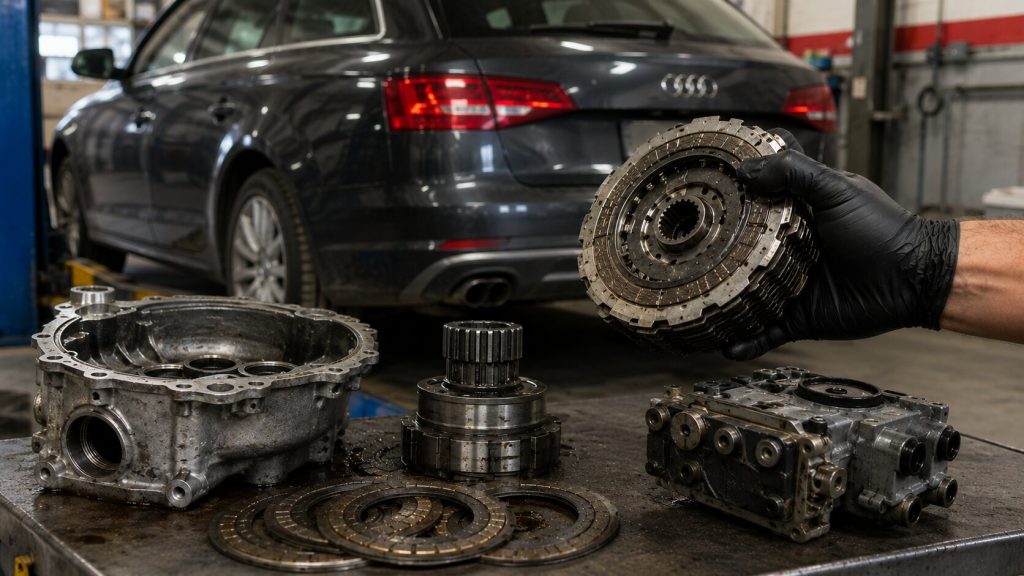
When I pull cars into the bay that have been regularly pushed up Little Cottonwood Canyon, the distinct scent of overheated transmission fluid usually tells the story before I even plug in a scanner. Navigating the sharp elevation profiles and variable traction zones of these Wasatch mountain roads exposes the fundamental mechanical weaknesses of modern electronically managed all-wheel-drive platforms compared to legacy mechanical setups.
High-frequency torque vectoring corrections on grade-separated switchbacks accelerate multi-plate clutch wear far faster than standard highway driving metrics ever suggest.
How Thermal Cycling Destroys Clutch Packs Under Full Load
Traditional Quattro setups rely on a mechanical Torsen center differential that continuously splits torque through worm gears. Because the gears stay locked together all the time, heat gets spread evenly across the whole drivetrain, keeping grip levels steady even when you hammer the throttle.
Ultra systems operate differently by design. They disconnect the rear axle entirely during cruising conditions to save fuel, using an electronically controlled multi-plate clutch at the transmission output and a dog clutch at the rear differential housing.
When climbing steep grades like the Wasatch passes, the electronic control unit detects micro-slips from the front tires instantly. That forces the multi-plate clutch packs to rapidly clamp together under full load conditions.
Friction material degradation accelerates exponentially during this operational phase. The constant transition from open to locked states causes severe thermal shock across the clutch friction discs. Instead of wearing evenly, the plates experience:
- Localized hot spotting across high-friction contact points
- Micro-pitting on the steel separator plates
- Premature glazing of the paper-based friction material
- Accelerated thermal breakdown of the actuation fluid
Pinpointing Clutch Slip With Factory Diagnostic Scans
Catching electronic AWD wear before it shears internal components requires specialized logging tools. Generic OBD-II scanners fail completely when diagnosing Quattro Ultra complaints, as they lack the ability to capture proprietary bus communication data streams.
When these cars roll into the shop, I hook up an OEM-level scanner to track live hydraulic pressure right at the actuator piston. Reviewing actual slip speed versus commanded slip speed under load isolates pressure drops quickly.
Next, extracting the transmission control module thermal history logs reveals historical over-temp flags triggered during rigorous canyon climbs.
Finally, performing a fluid analysis uncovers microscopic friction material suspended in the Quattro coupling fluid. Dark, metallic-laden fluid confirms clutch pack distress long before mechanical failure occurs.
Hydraulic Pressure Testing Protocols
Validating pump performance requires measuring barometric pressure compensation values inside the mechatronic unit. Low pressure readings indicate internal seal bypasses caused by prolonged exposure to high-heat canyon runs.
Duty cycle percentages on the primary control solenoid must be monitored closely during active slip events. Out of spec amperage draws point directly to winding degradation inside the actuation coil.
Diagnostic Verdict: If you smell burnt ATF near the tail housing after a run up Little Cottonwood, don’t wait for a code. Pull the fill plug and check for metallic sheen in the fluid; you’re already dropping friction material.
Fluid Degradation Analysis
The proprietary fluid specified for electronic coupling units breaks down rapidly under repetitive thermal cycling. Synthetic base stocks thin out over time, reducing shear film strength between the rotating friction discs.
Pull the fluid sample right after a tough hill climb so you catch the metal particles floating around before they settle down into the pan.
Evaluating Clutch Pack Thermal Thresholds
Hammering an electronically managed clutch pack up a sustained grade cooks the fluid fast if you ignore thermal limits. Friction plates manufactured for fuel-economy-focused platforms lack the mass required for sustained high-torque demands.
Material Composition Limits
Paper-based friction facings bond to steel core plates using high-temperature resins. Sustained temperatures exceeding normal operating parameters soften these bonding agents.
Once the adhesive breaks down, individual segments delaminate from the core plate. This structural failure causes immediate grabbing, shuddering, and permanent loss of rear-axle torque transfer capabilities.
Environmental Stress Factors
Ambient winter temperatures create extreme thermal gradients across the transmission housing. Even though snow spray keeps the outside aluminum housing ice-cold, the internal clutch packs spike in temperature the second you hammer the throttle on slick ice.
This severe temperature differential induces micro-warping across the steel reaction plates. Warped plates fail to release completely when open commands are issued, creating constant drag and accelerated mechanical wear.
Long-Term Maintenance Strategies For Alpine Driving
Enthusiasts tackling high-altitude mountain passes require disciplined service intervals to offset thermal fatigue. Standard factory maintenance schedules assume mixed highway and suburban driving cycles. Operating consistently in extreme mountain environments cuts fluid service life in half.
Fresh fluid preserves the frictional coefficients necessary for smooth multi-plate engagement. Neglecting these intervals allows suspended carbon particulate matter to act as an abrasive paste against the steel separator plates.
Upgraded Component Solutions
Aftermarket manufacturers now offer heavy-duty friction disc replacements featuring aramid fiber blends instead of standard paper facings. These upgraded materials withstand higher threshold temperatures without glazing or delaminating.
Integrating high-capacity fluid reservoirs or auxiliary cooling lines also helps stabilize operating temperatures during sustained hill-climbing sequences. These modifications protect the mechatronic control unit from premature thermal shut down or permanent electronic failure.
Advanced Torque Distribution Dynamics
Tracking live data streams during active torque splits exposes exactly where the Quattro Ultra system begins to slip. Unlike permanent all-wheel-drive systems that continuously distribute torque to all four corners, the Quattro Ultra setup relies heavily on predictive algorithms.
Sensors tracking steering angle, lateral acceleration, throttle position, and yaw rate feed data to the computer constantly. When climbing slick canyon grades, this predictive software triggers hundreds of micro-adjustments per minute.
Every single adjustment commands the hydraulic pump to actuate the clutch pack, generating localized friction heat. Over the course of a multi-mile ascent, this constant modulation transforms the clutch assembly into a thermal oven.
Without adequate cooling time between mountain runs, the accumulated heat degrades rubber seals and weakens electronic actuator solenoids. Key warning signs include:
- Intermittent binding sensations during tight low-speed parking lot maneuvers.
- Delayed power transfer to the rear axle when accelerating from a dead stop on ice.
- Unusual mechanical whines originating from the rear differential housing under load.
- Noticeable transmission fluid discoloration during routine service intervals.
Addressing Drivetrain Failures Early
Ignoring early drivetrain shudder or delayed engagement leads to catastrophic failure of the rear differential housing and complete multi-plate clutch pack destruction. Ignoring that burnt smell forces a complete rear differential and clutch assembly replacement instead of a simple fluid flush.
Independent specialists deliver agile, precise diagnostic workflows without the corporate overhead. Protect your Audi performance investment by scheduling a drivetrain inspection at Steve’s Automotive Specialists located at 2809 S 2300 E, Salt Lake City, UT 84109.
Frequently Asked Questions
Does Audi Quattro Ultra require more maintenance than legacy Torsen systems?
Yes. The electronic multi-plate clutch system demands more frequent fluid and filter services to remove degraded friction material generated during active torque transfers.
Can driving up steep mountain passes permanently damage the clutch packs?
Yes. Extended exposure to high-load switchback climbs causes extreme heat-soaking, which glazes the friction discs and degrades the hydraulic fluid prematurely.
Are system warning lights always triggered when clutch wear begins?
No. Initial clutch pack micro-slip and thermal degradation often occur completely silently without triggering any dashboard fault codes or warning lights.
Does changing tire tread depth affect the Quattro Ultra engagement frequency?
Yes. Uneven tire wear creates rolling circumference discrepancies that trick the wheel speed sensors into commanding constant, unnecessary AWD engagement cycles.