
Ford vehicles often experience rough idling due to issues with the Electronic Throttle Body (ETB), vacuum leaks, or carbon buildup in the intake system. In Utah’s climate, extreme temperature swings and high-elevation air density can exacerbate these mechanical failures, leading to stalling or poor fuel economy if left unaddressed by a technician.
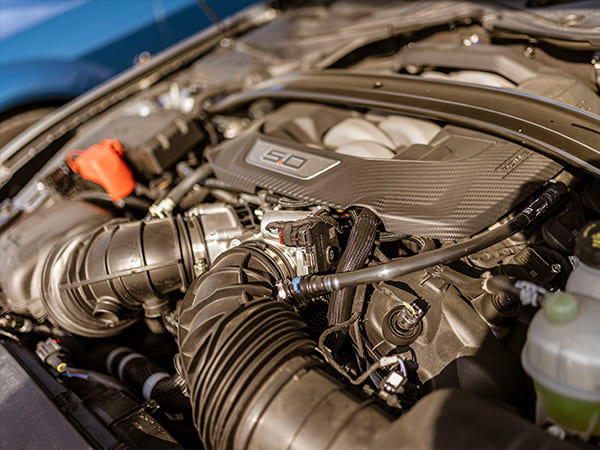
Why Your Ford’s Idle Should Not Be Ignored
An engine’s idle is its “resting” state. For Ford owners in Utah—whether you are sitting in stop-and-go traffic on I-15 or waiting at a light in Logan—that idle should be consistent and quiet. When your truck or car shudders, vibrates, or the RPM needle bounces, the engine is struggling to maintain the correct air-fuel ratio.
Ignoring a rough idle is rarely just a matter of comfort. It is often a warning sign of an underlying efficiency issue. If the engine cannot manage itself at a standstill, it is likely underperforming under load, which can lead to increased emissions and decreased engine longevity.
How Ford’s Electronic Throttle Control Works
Modern Ford vehicles, particularly the F-150 and Explorer models common on Utah roads, utilize an Electronic Throttle Control (ETC) system. Instead of a physical cable connecting your pedal to the engine, a motor opens and closes the throttle plate based on sensor data.
To maintain a steady idle, the Powertrain Control Module (PCM) monitors:
- Air Intake: Measured by the Mass Air Flow (MAF) or Manifold Absolute Pressure (MAP) sensors.
- Engine Temperature: Adjusting the “richness” of the fuel mix during cold winter starts.
- Load: Compensating for the power draw of the air conditioning or the alternator.
What Causes a Ford Rough Idle in Utah?
In our experience at the shop, Ford rough idle issues often stem from a few specific regional and mechanical factors.
1. Electronic Throttle Body (ETB) Failure
This is a frequent culprit in Ford’s lineup from the last decade. Over time, the internal gears or the motor in the throttle body can wear out. This results in the “Limp Mode” wrench light or a “stumbling” feel at red lights.
2. The “Utah Factor”: Carbon and Dust
Utah’s environment plays a role. We have high levels of dust and significant seasonal temperature shifts. These conditions can lead to faster carbon buildup on the throttle plate and inside the intake valves, especially in EcoBoost (Gas Direct Injection) engines. When carbon accumulates, the throttle plate cannot close precisely, causing the computer to “hunt” for the right idle speed.
3. Vacuum Leaks
Rubber hoses expand and contract violently between a 100°F Utah summer and a 10°F winter. This cycles the material until it cracks. A leak in a vacuum line introduces “unmetered” air into the engine, leaning out the fuel mixture and causing a shaky idle.
4. Spark Plug and Coil Pack Wear
High-altitude driving requires your ignition system to be in top shape. If a spark plug is fouled or a coil pack is weak, you might not notice a “miss” at highway speeds, but you will certainly feel it while stopped at an intersection.
Is Your Ford Stalling or Just Vibrating?
It is easy to mistake one issue for another. Here is how we differentiate symptoms from root causes:
- Symptom: The car shakes only when the A/C is on.
- Likely Cause: The IAC (Idle Air Control) or PCM isn’t compensating for the extra load.
- Symptom: Rough idle accompanied by a “hissing” sound.
- Likely Cause: A vacuum leak or a disconnected PCV hose.
- Symptom: The RPMs drop so low the car almost stalls, then bounce back up.
- Likely Cause: A dirty or failing Electronic Throttle Body.
- Symptom: Rhythmic vibration felt through the steering wheel.
- Likely Cause: Engine mounts are worn out, rather than a fuel or air issue.
Case Study: Utah Winter Idle Failures
We recently saw a Ford F-150 owner from the Salt Lake area who complained of a violent shudder every morning during the January cold snap. The vehicle ran fine once it warmed up.
Upon inspection, we found that moisture had entered a cracked vacuum line and frozen, partially blocking the sensor’s ability to read pressure. Once the engine heat melted the ice, the “leak” became small enough for the computer to compensate. Replacing the brittle lines resolved the issue before it could lead to a total stall on a snowy morning. This is a classic example of how Utah’s climate turns minor wear into a noticeable driveability problem.
Expert Ford Rough Idle Performance Review
If your Ford is struggling to maintain a steady rhythm, it is best to have the diagnostic codes and live sensor data reviewed. For drivers along the Wasatch Front looking for a clear answer on engine performance, you can reach out to Steve’s Automotive Specialist for a professional inspection and localized expertise.
Frequently Asked Questions
Is it safe to drive my Ford with a rough idle?
While you can often drive the vehicle, a rough idle is a precursor to stalling. If your engine stalls while you are turning or in heavy traffic, you may lose power steering and braking assistance, creating a safety risk.
Why does my Ford idle worse when it’s cold outside in Utah?
Cold air is denser, and engines require a “richer” fuel mixture to start. If your sensors (like the MAF) are dirty or your spark plugs are worn, the engine can’t balance this delicate cold-start mixture, leading to stumbles until the block reaches operating temperature.
Will a bottle of fuel injector cleaner fix my rough idle?
In some cases of minor carbon buildup, it may help. However, if the issue is a mechanical failure of the throttle body or a vacuum leak, “mechanic in a bottle” solutions will not address the root cause.
Does high altitude affect how my Ford idles?
Yes. At higher elevations in Utah, there is less oxygen. Your Ford’s computer automatically adjusts for this, but if the air filter is clogged or the MAP sensor is failing, the vehicle will struggle to calculate the correct oxygen-to-fuel ratio.
Resolving Your Ford’s Rough Idle Issues
A rough idle in a Ford is a solvable problem, usually tied to air intake, ignition, or sensor accuracy. By addressing these symptoms early—especially before the extreme shifts of Utah’s seasons—you prevent more costly repairs like catalytic converter damage or total engine stalls. Staying proactive with throttle body cleanings and spark plug intervals is the most effective way to keep your Ford reliable for the long haul.