
Ford radiator leaks often manifest as low coolant levels, sweet-smelling puddles, or engine overheating. In Utah’s high-altitude and extreme temperature swings, these cooling system failures can accelerate quickly. Identifying early warning signs like discolored fluid or cabin heater inconsistencies is essential to preventing permanent engine damage and costly head gasket repairs.
Why Coolant Health Matters for Utah Ford Drivers
The radiator is the heart of your Ford’s cooling system. Its primary job is to dissipate heat absorbed from the engine block by the coolant. For drivers in Utah, this component works harder than in many other parts of the country. Between the steep climbs of Parley’s Canyon and the blistering summer heat in Utah’s desert valleys, your cooling system is under constant thermal stress.
When a radiator leaks, the pressurized system loses its ability to regulate temperature. Because modern Ford engines often use aluminum heads and composite intake manifolds, even a brief period of overheating can lead to warping or cracking. Understanding the symptoms of a leak before the needle hits the “Red” zone is the difference between a minor cooling system service and a total engine overhaul.
Top 4 Ford Radiator Leak Symptoms to Watch For
While some leaks are obvious, others are subtle and only occur under specific pressure conditions. Here are the most frequent signs we see at our shops.
1. Visible Coolant Puddles
Ford vehicles typically use specific coolant formulations (often orange, yellow, or specialty green/blue Motorcraft fluids). If you notice a bright, somewhat oily fluid pooling under the front of your vehicle after it has been parked, it is a primary indicator of a breach in the radiator or a connecting hose.
2. The “Sweet” Aroma
Engine coolant contains ethylene glycol, which has a distinct, sugary smell. If you smell something akin to maple syrup after driving—especially near the grille or inside the cabin—coolant is likely escaping the sealed system and evaporating on hot engine components.
3. Fluctuating or High Temperature Gauge
If your temperature gauge is “searching” (moving up and down significantly) or consistently sitting higher than the midpoint, your coolant volume is likely low. In many Ford F-150s and Explorers, a drop in pressure due to a pinhole leak will cause localized boiling, leading to erratic gauge readings.
4. Discolored or “Sludge” Like Coolant
A healthy radiator should contain translucent fluid. If you check your reservoir and see a brownish, milky, or thick consistency, it indicates internal corrosion or a failing radiator oil cooler. This sludge restricts flow and can lead to a catastrophic “clog” that mimics a leak by forcing fluid out of the overflow tank.
Common Causes of Ford Radiator Failure in Utah
In our experience servicing Fords in the Salt Lake Valley and surrounding areas, radiator failures generally stem from three specific areas:
- Plastic End Tank Seams: Most modern Ford radiators use aluminum cores crimped to plastic side tanks. Over time, the constant expansion and contraction from Utah’s -10°F winters to 100°F summers cause these crimps to loosen or the plastic to crack.
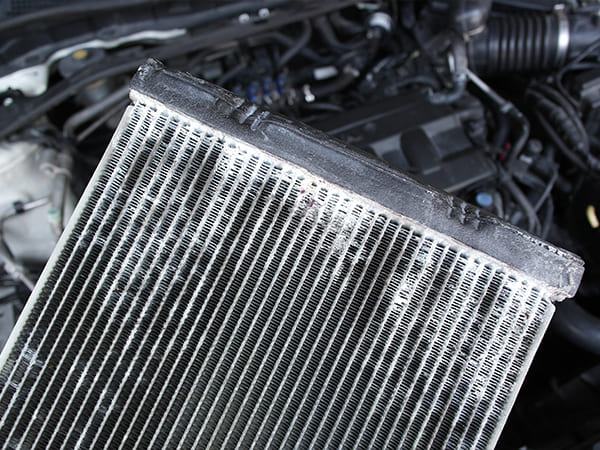
- Electrolysis and Corrosion: If the coolant’s pH balance becomes acidic, it can eat through the thin aluminum tubes of the radiator from the inside out.
- Debris Impact: Because we share the roads with heavy construction and winter salt spreaders, road debris can easily puncture the delicate fins of the radiator through the front grille.
Real-World Local Insight: The “Wasatch Heat” Factor
In Utah, we see a specific trend during the transition from spring to summer. A Ford cooling system might perform adequately during a cool morning commute in Sandy or Draper, but fail entirely when attempting a weekend trip to Southern Utah.
We recently saw a Ford Expedition that showed no signs of leaking during city driving. However, the owner noticed the temperature spiked every time they headed up I-80 toward Park City. Upon inspection, we found a “pressure-dependent” leak—the radiator only leaked once the engine reached the high operating pressures required for mountain climbing. This highlights why “it seems fine around town” isn’t a guarantee of cooling system integrity.
Preventative Care and Professional Ford Inspections
A radiator leak is rarely a “self-healing” problem. If you are constantly topping off your coolant reservoir, the fluid is going somewhere. Ignoring a small leak leads to:
- Air Pockets: Air entering the system creates “hot spots” in the engine.
- Water Pump Failure: Low coolant levels deprive the water pump seal of lubrication.
- Transmission Damage: On many Ford models, the transmission cooler is integrated into the radiator. A leak can lead to “cross-contamination,” where coolant enters the transmission—a condition often called the “strawberry milkshake of death” due to the appearance of the ruined fluid.
Professional Cooling System Pressure Test
While a DIYer can easily spot a puddle, many Ford cooling systems require a Pressure Test to find the exact source of a leak. Furthermore, modern Fords often require a specific “burping” or vacuum-fill process to remove air pockets from the heater core and engine block.
If you suspect your vehicle is losing fluid or running hot, having a technician perform a cooling system inspection can confirm if the issue is a simple hose, a radiator cap, or the radiator itself. For those in the Utah area, the team at Steve’s Automotive Specialist can provide a comprehensive cooling system pressure test and fluid analysis to ensure your Ford is ready for the road.
Drivers throughout the Salt Lake Valley who suspect a slow coolant leak are welcome to contact us to ensure their vehicle remains reliable for the season ahead.
Frequently Asked Questions
Is it safe to drive my Ford with a small radiator leak?
It is not recommended. A small leak can become a large one instantly if the system reaches a certain pressure. Furthermore, as coolant leaves, air enters, which can cause sudden engine overheating and permanent damage.
Can I use “Stop Leak” products in my Ford radiator?
We generally advise against these. While they may temporarily plug a small hole, they also coat the interior of your engine block and heater core, which can reduce cooling efficiency and lead to expensive clogs in the future.
How often should I change the coolant in my Ford?
Most Ford models using Motorcraft Yellow or Orange coolant have a long service interval, but in Utah’s harsh climate, we recommend a pH test and inspection every 30,000 miles to ensure the additives are still protecting against corrosion.
Why is my heater blowing cold air if I have a radiator leak?
The heater core relies on hot coolant to warm your cabin. If your coolant level drops too low due to a leak, the fluid can no longer reach the heater core, resulting in cold air blowing even when the engine is warm.
Strategic Cooling System Care
Identifying Ford radiator leak symptoms early is the best way to protect your vehicle’s longevity. From the sweet smell of evaporating fluid to the warning signs of a rising temperature gauge, these cues are your vehicle’s way of asking for attention. In a state like Utah, where geography demands so much from our engines, staying proactive with cooling system maintenance isn’t just a suggestion—it’s a necessity for reliable travel.