
Commercial Clearfield fleet braking systems in Clearfield face accelerated degradation due to high-frequency stop cycles and saline atmospheric conditions. Frequent deceleration causes kinetic energy to transform into extreme thermal loads, reaching 450°F and inducing rotor cementite formation. Consistent inspections prevent disc thickness variation and maintain hydraulic integrity against moisture.
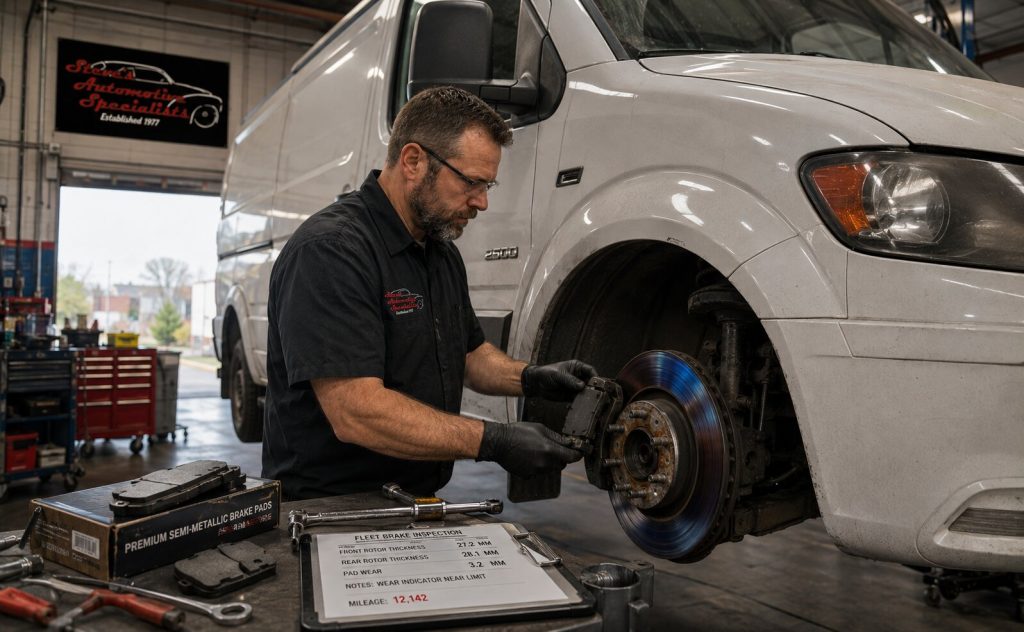
The constant transition from the eastern bench descents toward Main Street creates a thermal reality where the friction material never truly cools. I see cementite spots forming on the iron surfaces, which tells me the driver has been fighting pedal pulsation for weeks. This disc thickness variation is not a fluke. It is the result of kinetic energy dumping into the rotors faster than the air can pull it away during short-hop deliveries.
Why delivery routes near the Freeport Center accelerate rotor thinning
The logistics of the Freeport Center demand high-load and low-speed maneuvers that generate immense friction. I am measuring these rotors with a micrometer and finding significant thinning after only a few months of service. This mechanical wear is accelerated because a delivery van idling at a loading dock simply sits in its own heat without the benefit of passive cooling airflow.
The thermal reality of high-frequency stop cycles
I prefer semi-metallic pads for these heavy-duty applications because they shed heat better than ceramics. Ceramic pads tend to glaze over when they are subjected to these weight loads without reaching high enough sustained speeds to sweep the friction surface clean. This glazing leads to a loss of stopping power and increased pedal effort for the driver during long shifts.
Navigating the Great Salt Lake salinity and caliper seizure
Clearfield sits within a high-salinity atmospheric zone that relentlessly attacks exposed metal surfaces. I am looking at the caliper carriers on this van and seeing the beginning of galvanic corrosion that bonds pads to brackets. This salt-driven degradation forces the braking system to work against itself, creating constant drag that kills fuel efficiency.
Corrosion mitigation for Clearfield fleet longevity
The chemical bond between the steel backing plate and the iron bracket causes the pads to hang up and drag. A dragging pad generates friction even when the driver is off the pedal, which leads to fluid boiling and a spongy feel. I spend as much time cleaning and lubricating slide pins as I do replacing friction material to prevent this premature failure.
Precision inspections vs emergency repair downtime
Hydraulic integrity serves as the silent failure point for local fleets operating in high-utility cycles. I am engaging a refractometer to measure the DOT 4 boiling point and ensure the fluid can withstand the intense heat of frequent stops. The ABS and traction control pumps in these vans cycle thousands of times more than a commuter car, which actively pulls moisture into the lines.
Why the 200 ppm copper threshold matters for fleet safety
Once the copper content hits the 200 ppm threshold, the internal solenoids of the ABS module are at risk of irreparable corrosion. A high-priority flush is a fraction of the cost of replacing a seized control unit after a catastrophic failure. I see the results of neglected fluid every time a fleet manager calls about a pedal that goes to the floor during a heavy surge.
Sustaining fleet uptime during I-15 May traffic surges
The May 2026 lane shifts near the 650 North interchange are creating a nightmare for local brake hardware. I am seeing an influx of vehicles with warped rotors specifically from drivers navigating this congested corridor. The erratic braking patterns and panic stops in heavy traffic force the pads into the rotors with immense, localized pressure.
How regional congestion dictates aggressive maintenance intervals
I am currently torquing these heavy-duty lug nuts to the 140Nm specification to ensure even clamping force across the new rotor hats. Proper installation is the only way to combat the mechanical fatigue caused by regional construction congestion and heat. We calibrate our service intervals to reflect these local environmental stressors rather than relying on generic factory manuals.
The fluid test strips just turned purple, indicating a complete breakdown of corrosion inhibitors. I am measuring a 0.003-inch variation in rotor thickness across the friction path. These data points confirm the hydraulic system was failing while the mechanical hardware was reaching a thermal tipping point.
Stop fighting pedal pulsation caused by Freeport Center stop-cycles. Reach out to Steve’s Automotive Specialist in 975 E 700 S, Clearfield, UT 84015 to have your rotors measured for cementite formation and ensure your fleet is cleared for heavy-load delivery.
Frequently Asked Questions
How often should Clearfield fleet brakes be inspected?
Fleet vehicles should undergo professional brake inspections every 5,000 to 7,000 miles. The identification of salt-driven caliper drag and hydraulic contamination during scheduled inspections prevents expensive downtime and safety failures.
Why do fleet brakes wear faster than passenger car brakes?
Fleet brakes experience accelerated wear due to high-frequency stop cycles and constant weight loads. Frequent braking prevents rotors from cooling, leading to heat soak and cementite formation. This environment is far more demanding than the typical commuter cycle seen in standard passenger vehicles.
Does local weather in Utah affect commercial braking systems?
Yes, the proximity to the Great Salt Lake introduces saline moisture that accelerates corrosion on brake components. Additionally, rapid temperature shifts and industrial dust from areas like the Freeport Center can lead to seized calipers and abrasive wear on the friction surfaces of the rotors.
What is the danger of high copper levels in brake fluid?
High copper levels indicate that the protective inhibitors in the brake fluid have depleted, leading to internal corrosion of the ABS and TCS solenoids. Surpassing the 200 ppm copper threshold dictates an immediate fluid exchange to maintain the structural integrity of the ABS valves during heavy-duty cycles.
Should I use ceramic or semi-metallic pads for my delivery fleet?
Heavy-duty fleets benefit from the enhanced heat transfer and structural durability of semi-metallic pads. Ceramic friction materials frequently glaze during low-speed maneuvers because they do not meet the thermal demands required to prevent surface hardening and subsequent braking degradation.