
Intense summer heat and stop-and-go campus traffic accelerate thermal fatigue in brittle Audi plastic coolant flanges. Pressure tests your cooling system before peak temperatures arrive to avoid sudden leaks, catastrophic pressure loss, and cracked engine blocks on your daily commute.
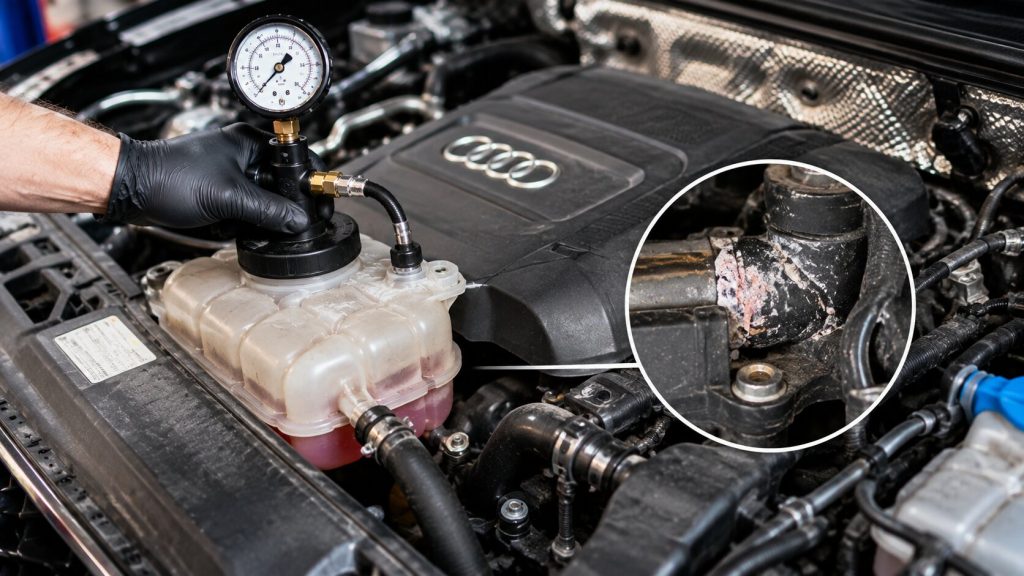
Audi Coolant Degradation Mechanics
Normal operating pressures inside the pressurized cooling loop hover near 15 psi while coolant temperatures reach 215°F. Audi utilizes injection-molded plastic flanges bolted directly to hot aluminum cylinder heads to save weight and production costs.
Continuous heat-soaking from Utah summer peaks causes the polymer matrix to experience severe thermal fatigue. The distinct difference in thermal expansion rates between the aluminum engine block and the plastic flange creates relentless mechanical shear stress at the mounting O-ring channel.
- Polymer Embrittlement: High continuous heat turns the flexible plastic matrix rigid, chalky, and structurally compromised.
- Thermal Expansion Mismatch: Aluminum engine blocks and plastic fittings expand at different rates, tearing the sealing O-ring groove apart.
- Internal Pressure Spikes: Microscopic fissure lines widen under operational pressure until the entire flange housing shears off clean.
Older Audi models driving regular campus loops accumulate thousands of heat cycles that accelerate this chemical breakdown. When the plastic loses its plasticizers, it becomes as brittle as glass. A tiny vibration from hitting a pothole on State Street is often all it takes to shatter the weakened flange completely. I have pulled countless cars into my shop where the owner thought they just had a loose hose, only to find the entire hose neck snapped clean off the housing.
If an Audi 2.0T loses pressure during a 20 psi cold test without an external puddle, don’t waste time looking at the hoses—sniff the rear cylinder head flange mating surface with an inspection mirror. If you spot chalky white crust under the clips, the polymer matrix has sheared at the O-ring channel, and it will snap completely under the next thermal cycle on State Street.
Proactive Cooling System Diagnostics
Catching a failing flange before it strands you on I-15 requires systematic testing rather than a casual visual glance. Pinpoint hidden hairline fractures by combining a 20 psi cold pressure decay test with an articulated borescope inspection.
- Cold System Pressurization: Attach a high-pressure hand pump to the expansion tank and apply 20 psi to a cold engine.
- Borescope Inspection: Insert an articulated optical tool past the intake manifold to check the hidden rear cylinder head mating surface.
- Crystallization Scan: Look closely for white, crusty weeping residue accumulating around retaining clips and temperature sensor ports.
- Pressure Decay Tracking: Measure system pressure drop over a five-minute timeline to expose hidden hairline fractures.
If the system holds pressure during the cold test, I always follow up with a hot pressure check because expanding metal and plastic can sometimes mask a hairline crack until operating temperatures are reached. Adding UV dye to the coolant makes invisible weeping spots glow under a blacklight.
If the pressure gauge drops steadily without an external puddle on the garage floor, the coolant is usually leaking internally or evaporating instantly off hot exhaust shielding. Catching these subtle pressure drops early saves you from paying for a tow truck later.
Campus Route Stressors and Thermal Cycling
Driving habits around Orem play a massive role in how fast these plastic components degrade. Short trips from apartment complexes near campus to the student center do not allow the engine bay to cool down properly. Instead, the heat gets trapped under the hood when you park, causing severe heat-soaking conditions that bake the plastic components.
When you start the car again for the afternoon drive, the rapid influx of cold coolant hits hot, brittle plastic, creating extreme thermal shock. This cycle repeats multiple times a day during the semester.
- Zero Airflow Idling: Traffic lines near parking structures spike coolant temperatures while stopping radiator airflow completely.
- Intense Under-Hood Heat Trapping: Short campus commutes prevent engine bays from ventilating residual heat upon parking.
- Gradual Fluid Depletion: Reservoir levels drop slowly over weeks, tricking drivers into ignoring early warning chimes.
Electric cooling fans work overtime, but the constant high temperatures cook the plastic flanges at the back of the cylinder head where coolant flow is restricted. By the time the dashboard warning light chimes, the flange is already hanging on by a thread.
Financial Risk of Preventative Maintenance Neglect
Waiting for a cooling component to fail completely on your way to a final exam is a massive financial gamble. A simple preventative replacement of an Audi plastic coolant flange costs a fraction of what you will pay for an emergency tow and major engine repairs.
When a cooling flange shears on the highway, the engine loses all coolant in less than sixty seconds. Aluminum cylinder heads warp rapidly when subjected to uncooled running conditions, leading to blown head gaskets or cracked valve guides.
- Emergency Towing Costs: Getting stranded on I-15 requires expensive heavy towing services during peak traffic hours.
- Cylinder Head Warping: Uncooled running conditions cause aluminum heads to warp, requiring expensive machine shop work or total replacement.
- Lost Time and Transport: Major engine teardowns leave you without a vehicle for weeks right in the middle of a heavy academic semester.
Replacing a warped cylinder head costs thousands of dollars and leaves you without reliable transportation. Paying attention to early warning signs like sweet smells, white crusty residue on the engine block, or minor coolant loss between oil changes stops this disaster before it starts.
Expert Audi Service in Orem
Purchasing cheap aftermarket plastic coolant flanges online backfires, as inferior polymer blends warp within months under intense Utah summer conditions. We refuse to install customer-supplied parts because these components lack the precise metallurgical tolerances required for German engineering and invalidate our repair warranties. By choosing our shop, you bypass corporate dealership backlogs and inflated agency pricing for independent expertise that understands local thermal stress.
Avoid the financial risk of a catastrophic engine overheat by scheduling your preventative cooling system inspection today at Steve’s Automotive Specialists, 925 N State St, Orem, UT 84057.
Frequently Asked Questions
Does a sweet smell inside the cabin mean my heater core is leaking?
Yes. Sweet sugar smell and greasy windshield haze usually mean your heater core or firewall line is leaking.
Can I drive my Audi short distances if the coolant warning light flickers?
No. Operating an engine with low coolant levels on Utah summer grades can cause aluminum cylinder heads to warp within minutes.
Are aftermarket aluminum flanges better than factory plastic replacements?
Yes. Upgrading to a machined aluminum flange eliminates the thermal embrittlement failure point permanently.
Should I replace my thermostat housing at the same time as the coolant flange?
Yes. Both components age at identical rates under heavy thermal stress, replacing them together saves on labor costs and prevents secondary leaks.