
Land Rover cooling systems often lose pressure through cracked plastic tanks, bad hose seals, or hidden pipes under the engine. As coolant escapes as hot steam while you drive, it evaporates instantly without leaving puddles on your driveway. Testing the system with pressure and ultraviolet tracer dye helps catch these hidden steam leaks before they cause major engine overheating.
Coolant levels dropping in a Land Rover without leaving a puddle on the driveway usually points to slow pressure loss from fragile plastic hose connectors, heat-stressed coolant tanks, or hairline cracks in hidden crossover pipes. When coolant escapes under high pressure as fine steam while you drive, the heat evaporates the fluid before it ever drips onto the ground. Catching these hidden steam leaks early keeps your engine running safely and prevents severe overheating damage.
How Land Rover Cooling Systems Experience Hidden Pressure Loss
Land Rover engines run hotter and under higher pressure than many standard vehicles to keep the engine operating efficiently. This continuous high heat, combined with Utah’s hot summer drives and freezing winter cold, puts heavy stress on the plastic parts under the hood. Over time, plastic coolant pipes, bleeder screws, and reservoir tanks turn brittle and develop tiny cracks along their seams.
Under normal conditions, liquid coolant flows through these sealed parts cleanly. Once a micro-crack opens up, the system holds fluid fine while parked, but vents hot coolant steam the moment the engine reaches full temperature. Because the escaping coolant turns into invisible steam inside the warm engine bay, it leaves behind only faint white crusty spots instead of wet drips. Drivers climbing steep canyon roads usually see a low coolant warning light on the dashboard long before finding any fluid under the car.
Common Hidden Leak Paths Across Expansion Tanks and Hoses
The plastic coolant expansion tank is a primary source of slow, puzzling fluid loss. Engine heat weakens the plastic tank over time, causing tiny hairline cracks around the bottom hose connectors and molded seams. The radiator pressure cap also has internal rubber seals that dry out, allowing hot steam to vent continuously out of the overflow tube while driving on the highway.
Rubber hoses and quick-connect fittings are another frequent failure area. The rubber O-rings inside these connectors harden and lose their seal, allowing coolant to seep quietly behind metal heat shields. Plastic bleeder screws attached to upper radiator hoses can also crack from normal engine vibration, leaking hot vapor directly into the engine bay.
- Expansion Tank Body Seams: Micro-cracks open up when the engine gets hot, releasing steam around the tank’s edges.
- Pressure Cap Seals: Worn cap seals leak steam under normal driving pressure, dropping coolant levels without leaving drips.
- Quick-Connect Hose Seals: Hardened internal rubber seals let fluid weep quietly underneath hose clips.
- Bleeder Screws: Brittle plastic threads crack or strip, creating a constant slow steam leak.
Why Concealed Coolant Leaks Stay Invisible
Hidden plastic pipes tucked deep inside the center of the engine hide leaking coolant from plain sight. On V6 and V8 Land Rover engines, plastic crossover pipes sit directly under the intake manifold where engine heat builds up the most. When these hidden pipes crack, escaping coolant pools in the middle of the engine block and slowly bakes away before ever reaching the ground.
Lower radiator hose connections and oil cooler seals also hide slow leaks behind plastic belly pans and heavy metal skid plates. The protective lining on these shields acts like a sponge, catching small drops of coolant until air moving under the car dries them out completely. By the time fluid saturates a skid plate enough to drip onto your driveway, the cooling system has already lost a lot of fluid.
Professional Pressure Testing and Diagnostic Evidence
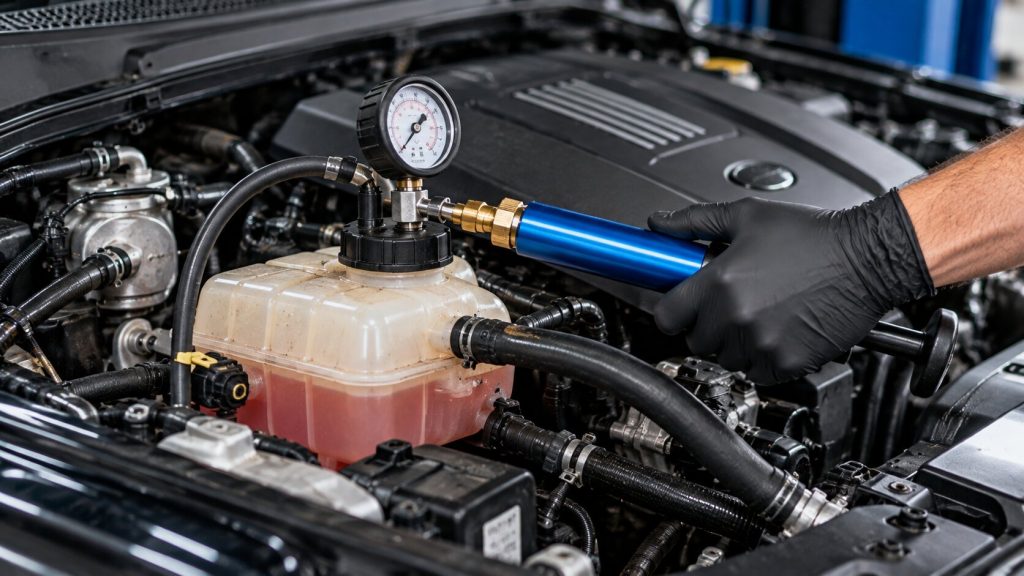
Finding an invisible steam leak requires careful testing methods beyond just looking with a flashlight. We connect a specialized cooling system pressure tester to the coolant tank while the engine is cold and pump the system up to safe factory pressure limits. Watching the pressure gauge over twenty minutes reveals subtle drops that point to an active leak path anywhere in the engine bay.
If the pressure drops but no liquid is dripping, we add a special UV tracer dye to the coolant that glows bright green under ultraviolet light. The glowing dye leaves clear, bright trails around leaking hose connectors, cracked plastic tanks, and hidden pipes deep under the engine. Checking the vehicle with UV light helps us pinpoint the exact leak location quickly so we can fix only what is broken.
- Cooling System Pressure Test: Finds tiny pressure drops while the engine is cold before fluid escapes visibly.
- UV Glow Dye Inspection: Shows bright glowing trails where coolant steam has escaped and dried.
- Endoscopic Camera Tool: Lets us inspect tight, hidden spaces under the engine without taking parts apart unnecessarily.
- Combustion Gas Detection: Confirms whether pressure loss is coming from simple external plumbing or internal head gasket issues.
Protecting Your Engine from Secondary Overheating Damage
Driving a Land Rover with an active cooling system leak carries big risks for your entire engine. Aluminum engine parts can warp quickly if steam pockets form inside, leading to blown head gaskets and major repair bills. Catching tiny leaks early keeps system pressure steady, protects engine parts, and prevents sudden hose bursts while you are on the road.
If your low coolant light turns on or you smell a sweet hot coolant odor after parking, contact our team at Steve’s Automotive Specialist, located at 2809 S 2300 E, Salt Lake City, UT 84109, to schedule a cooling system pressure test and leak repair.
Frequently Asked Questions
Why is my coolant low when there are no puddles under my car?
Coolant escapes as hot steam while you drive and evaporates against warm engine surfaces before reaching the ground. In other cases, fluid collects on protective skid plates or pools inside hidden spaces under the engine where you cannot see it.
How do you find a coolant leak that only happens when driving?
We attach a specialized pressure tester to the cooling system while the engine is cold to push fluid through tiny cracks without hot engine heat evaporating the evidence. Adding glowing UV tracer dye also lets us spot clear residue trails under ultraviolet light.
Can a faulty pressure cap cause coolant loss?
Yes. A worn coolant cap with dried rubber seals cannot hold proper system pressure, allowing hot coolant steam to vent out of the overflow tube while you drive and gradually lowering your fluid level without leaving obvious drips.
Is it safe to drive with a small cooling system pressure leak?
No. Driving with a pressure leak can lead to sudden overheating because a leaking system boils at a much lower temperature, creating steam pockets inside your engine that can cause serious damage without warning.