
Utah winters put heavy stress on Land Rover cooling systems, AGM batteries, air suspension parts, and all-wheel-drive systems. A pre-winter inspection checks antifreeze protection down to -30°F, tests battery starting power, inspects air suspension lines for moisture, and makes sure brake fluid is free of water to keep your vehicle running safely all season.
Sub-freezing morning temperatures across the Salt Lake Valley quickly expose hidden weaknesses in European luxury SUVs as rubber seals harden, battery power drops, and engine fluids thicken. Utah winter driving, from stop-and-go traffic on I-215 to steep, snow-packed climbs up Parleys Canyon, requires every system to work properly before cold weather hits. Checking key systems before snow falls helps catch small issues early so you avoid sudden breakdowns in freezing weather.
How Freezing Temperatures Affect Your Land Rover Cooling System and Heater
Land Rover engines use aluminum parts that need the right 50/50 mix of antifreeze and water to protect against internal damage in freezing weather. Over time, antifreeze breaks down, loses its ability to fight rust, and freezes at higher temperatures. If the coolant mix gets too weak, slush can form inside the radiator and heater core, causing the engine to overheat even when it is freezing outside.
Cold mountain air also causes plastic engine parts and rubber hoses to shrink slightly, leading to hairline cracks in coolant expansion tanks and hose fittings. A thorough cooling inspection evaluates three critical areas:
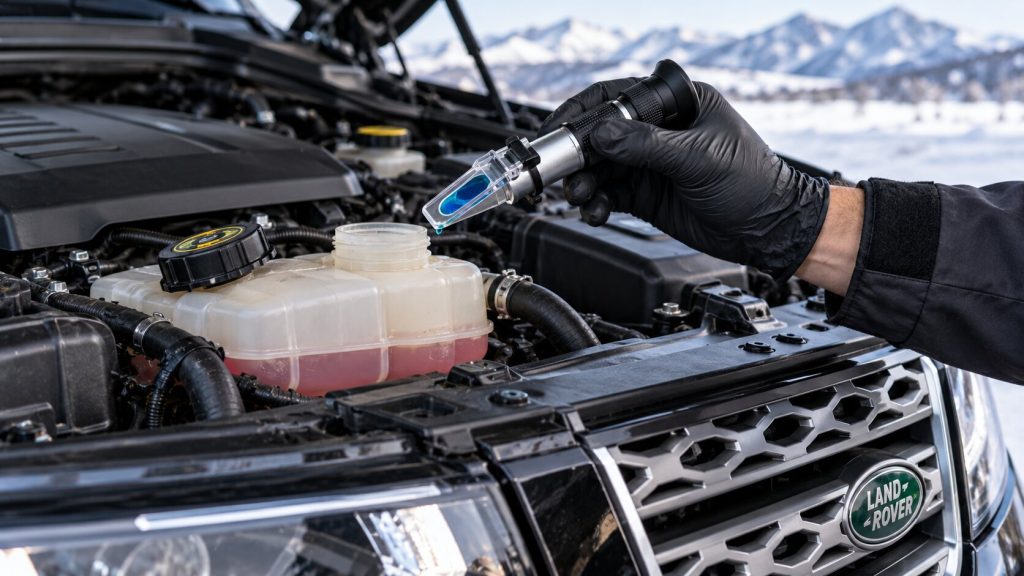
- Antifreeze Protection Level: Testing with an optical refractometer verifies your coolant protects down to -30°F rather than relying on inaccurate floating testers.
- Cold System Pressure Stability: Pressurizing the cooling circuit while the engine is cold reveals small contraction leaks before they trigger low-coolant warnings.
- Heater Core Circulation: Measuring coolant flow through heater hoses ensures your cabin heat stays hot and defrosts interior glass rapidly.
Testing Battery Starting Reserve and Alternator Charging Performance in Winter
Modern Land Rovers use heavy-duty Absorbent Glass Mat (AGM) batteries to power dozens of computer modules. When temperatures drop to freezing, the chemical reaction inside the battery slows down, cutting available starting power by 30 to 50 percent. A weak battery might start your engine fine on a mild autumn afternoon, but it can fail completely during an overnight cold snap in the Utah foothills.
Winter driving also places heavy demand on your electrical charging system as heated seats, windshield defrosters, and auxiliary heater fans run continuously. Our pre-winter electrical evaluation focuses on key battery and charging metrics:
- Digital Battery Load Test: Measures internal resistance and actual cold cranking amps against original factory specifications.
- Overnight Battery Drain Test: Verifies control modules go into deep sleep mode properly without draining power while parked.
- Charging System Load Test: Confirms the alternator maintains steady voltage while running all primary winter heaters at once.
Inspecting Air Suspension Lines, Drivelines, and All-Wheel-Drive Actuators
The Land Rover Terrain Response system uses electric motors, center differentials, and air suspension compressors to keep traction on snow and ice. Water trapped inside air suspension lines can freeze in cold weather, blocking the valves and causing the vehicle to sag or get stuck in access height. Inspecting the air dryer unit and pneumatic seals keeps water out of the system and prevents compressor failure.
Differential and transfer case fluids also thicken in sub-zero weather, making it harder for parts to move smoothly and delaying how fast all-wheel drive engages. Verifying fluid levels and replacing contaminated oil ensures your vehicle delivers instant traction when pulling onto slick Utah roads, while inspecting rubber suspension boots ensures seals stay soft against road salt and slush.
Measuring Brake Fluid Moisture and Evaluating Winter Tire Tread Depth
Stopping safely on icy roads requires clean brake fluid and even brake pad wear. Brake fluid naturally absorbs moisture over time, which lowers its performance and can rust internal Anti-lock Braking System (ABS) parts. In hard winter stops, water in the brake fluid can make the pedal feel soft and delay how fast the ABS responds. Testing brake fluid water content ensures it stays under 2% so your brakes respond instantly.
Your tires are the only part of your vehicle touching the snow. Winter tires and all-terrain tires with the mountain-snowflake symbol use soft rubber designed to stay flexible below 45°F. We measure tread depth across all four tires to ensure you have enough depth to clear slush, while caliper measurements on brake pads and rotors guarantee balanced stopping power across all four wheels.
Restoring Heated Windshield Grids and Defroster Airflow for Visibility
Staying safe in heavy Wasatch snowstorms requires clear visibility through your windshield. Land Rover heated windshields use tiny wires embedded in the glass to melt ice quickly, so testing grid continuity ensures no dead spots leave icy patches in your line of sight. Replacing worn wiper blades prevents streaking, chattering, and glare during night driving.
Your heater also relies on strong airflow through the dashboard vents. A clogged cabin air filter blocks defroster airflow, trapping humidity inside the vehicle and causing interior glass to fog up instantly when passengers get in with snowy coats. Replacing the cabin filter restores full air volume, while aligning washer jets ensures non-freezing fluid sprays directly onto the wiper sweep path.
Schedule Your Preventive Land Rover Winter Assessment
Steve’s Automotive Specialist provides comprehensive pre-winter assessments to protect your Land Rover before severe weather settles over Utah. We use factory-grade diagnostic tools and specialized testing equipment to ensure every vital system performs reliably in freezing temperatures. Visit our shop at 2809 S 2300 E, Salt Lake City, UT 84109, or call us to schedule your preventive inspection before the first winter storm hits.
Frequently Asked Questions
When is the best time to schedule a pre-winter assessment on a Land Rover?
Schedule your pre-winter assessment between October and early November before temperatures consistently drop below freezing in Utah. Testing early gives you enough time to fix weeping hoses, weak batteries, or worn tires before the first winter storm hits.
Why does my Land Rover air suspension lower itself in freezing weather?
Cold air causes the air inside your suspension springs to shrink slightly, which lowers the ride height a little bit. However, if your vehicle sags completely overnight, frozen moisture inside the valve block or a leaking seal is letting air escape.
Can I run standard green coolant in my Land Rover during winter?
No. Modern Land Rover engines require specific extended-life coolants designed for aluminum engine blocks. Standard green coolant can cause internal clogging, head gasket rust, and heater core failure.
How does cold weather affect my Land Rover battery?
Freezing temperatures slow down the chemical reaction inside your battery, cutting available starting power by up to 50%. At the same time, turning over a cold engine with thick oil takes much more power, causing an aging battery to fail without warning.
Do I need winter tires if my Land Rover has Terrain Response all-wheel drive?
Yes. Terrain Response controls how power goes to the wheels, but it cannot create grip if your tire rubber hardens in the cold. Winter tires use soft rubber compounds that stay flexible in sub-freezing weather to help you stop safely on ice.