
Road salt used in Sandy and Clearfield is hygroscopic, drawing moisture into the braking system. This accelerates brake fluid copper contamination and internal corrosion of calipers, steel lines, and ABS modules. Spring inspections using chemical test strips and moisture meters are essential to prevent hydraulic failure and costly component replacement.
The Chemical Connection Between Road Salt and Brake Failure
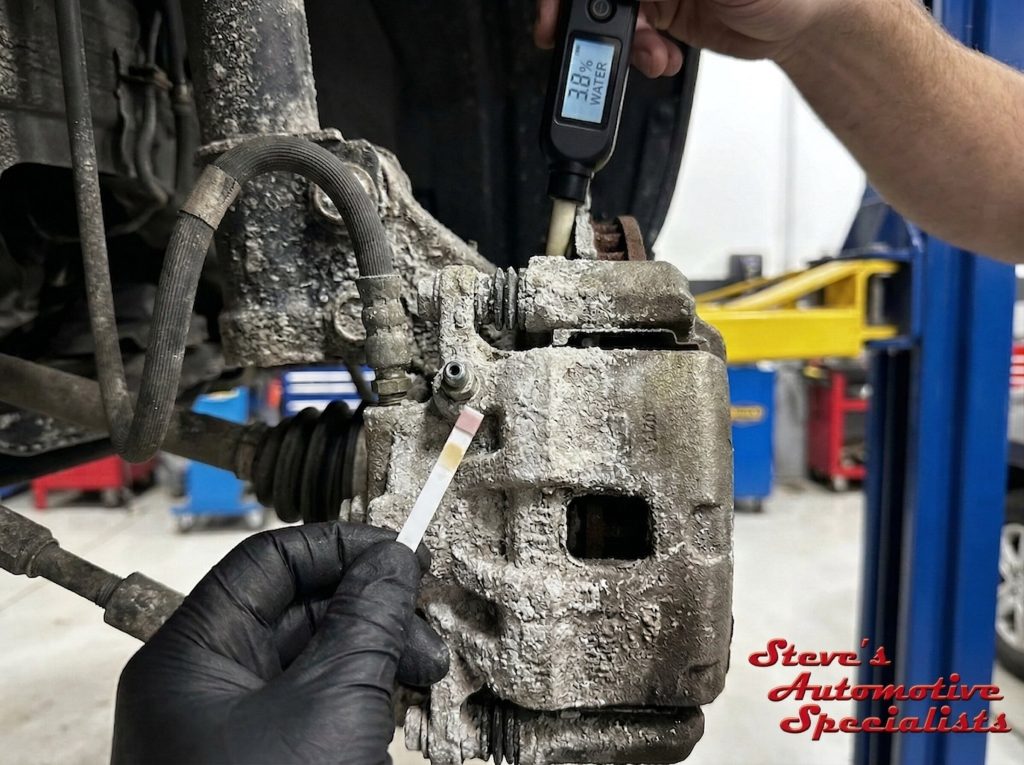
In Utah, the Department of Transportation (UDOT) primarily uses sodium chloride (rock salt) and liquid magnesium chloride to keep roads clear during our heavy Wasatch Front winters. Road salt keeps you from sliding, but its hygroscopic nature keeps your brake components perpetually damp.
For your vehicle’s braking system, this creates a two-pronged attack. First, the exterior of your brake lines and calipers is pelted with corrosive brine. Second, that same moisture-attracting property of salt increases the ambient humidity around the flexible rubber brake hoses. Because brake fluid is hygroscopic (it naturally absorbs water), it pulls that salt-laden moisture through the microscopic pores of the rubber hoses and past the seals in the master cylinder.
How Contamination Destroys the System from Within
Once moisture enters the brake fluid, the boiling point of the fluid drops significantly. This is known as “vapor lock” risk. However, the more insidious issue we see at our shops in Sandy and Clearfield is the chemical breakdown of the system’s internal protection.
Copper Leaching
Modern brake lines are often steel with a copper-rich inner coating. When moisture enters the fluid, it reacts with the copper. As copper levels in the fluid rise, the fluid becomes “brazing” or corrosive. Technicians look for copper as a “canary in the coal mine”—it is often the first sign that the fluid’s corrosion inhibitors have been depleted.
ABS Module Corrosion
The Anti-lock Braking System (ABS) uses a complex hydraulic control unit with tiny internal valves and tight tolerances. When salt-induced moisture reaches this unit, it can cause internal pitting. Internal rust can freeze these valves, either disabling your anti-lock system or causing a dangerous wheel lock-up.
Caliper Piston Seizure
The salt brine on Utah roads often sits in the crevice between the brake caliper piston and its dust boot. If the boot is even slightly cracked, salt enters and corrodes the piston bore. This leads to “hanging” brakes, where the pad stays in contact with the rotor, causing overheating and premature wear.
Symptoms vs. Root Causes: What Utah Drivers Notice
Many drivers in the Clearfield and Sandy areas come to us complaining of a “spongy” pedal or a vehicle that pulls to one side during braking. These are just symptoms, but the real culprit is usually brake fluid that has been ruined by winter salt.
- Symptom: A soft or sinking brake pedal.
- Root Cause: Moisture in the fluid has turned to gas under heat, or internal seals in the master cylinder have been scored by debris.
- Symptom: A grinding noise or “dragging” sensation.
- Root Cause: External salt corrosion has seized the slider pins or the piston, preventing the brake from releasing.
Real-World Insight: The “Post-Winter” Brake Flush
In our work, we frequently see vehicles that transitioned from a dry garage to the salt-slush of a Utah winter. We once saw a Clearfield SUV with thick brake pads lose all stopping power because the lines rusted out. The exterior of the line looked “crusty” from salt, but the failure actually started inside because the fluid hadn’t been changed in four years. The moisture absorbed during the winter months sat in a low point of the line, corroding it until it burst under pressure.
What we commonly see: It is rarely the brake pads that fail first after winter; it is the hydraulic integrity of the system.
How Technicians Diagnose Contamination
A visual “eye test” of brake fluid color is no longer an industry-standard way to determine fluid health. Dark fluid is a sign of trouble, but clear fluid can still be dangerous. Professional technicians use two primary tools:
- Chemical Test Strips: These measure the parts per million (ppm) of copper in the fluid. Once copper hits 200 ppm, your brake fluid is essentially acid and will slowly destroy your ABS system.
- Electronic Moisture Testers: These measure the actual boiling point of the fluid or the percentage of water content. Anything over 3% water content is considered a failure, as it drastically reduces braking efficiency during mountain descents (like those coming down Little Cottonwood Canyon).
Preventive Logic: The Spring Inspection
Waiting for a brake light to appear on the dashboard is a reactive—and expensive—strategy. Most manufacturers and organizations like the Car Care Council and MAP (Motorist Assurance Program) recommend a brake fluid exchange every two years or 30,000 miles, regardless of pad wear.
In Utah, we recommend aligning this with your spring oil change. Removing the “winter cocktail” of salt and moisture from your lines ensures that the heat of summer driving doesn’t lead to a total hydraulic failure.
Expert Brake Safety and Fluid Health Audit
If you have spent the winter driving through the salt and snow of the Wasatch Front, a professional evaluation can provide peace of mind. For a deep dive into your hydraulic health, the team at Steve’s Automotive Specialists can help. Our ASE Certified Mechanics maintain an A+ BBB Rating, providing the expert care needed to ensure your braking system is ready for the road ahead in Sandy and Clearfield. Feel free to contact us for a transparent check on your car’s brake health and safety.
Frequently Asked Questions
Does washing my car’s undercarriage prevent brake fluid contamination?
Underbody washes are excellent for preventing external rust on your brake lines and calipers. However, they cannot prevent the microscopic absorption of moisture into the fluid itself. You must maintain the internal chemistry of the fluid through regular flushes.
How does Utah’s altitude affect my brakes after winter?
Altitude itself isn’t the issue, but the mountain descents common in Utah generate extreme heat. If your fluid is contaminated with winter moisture, that heat will turn the water into steam, leading to a sudden loss of braking power known as brake fade.
Why is my ABS light on after the snow has melted?
Salt and road grime can often coat the wheel speed sensors, or internal corrosion in the ABS pump (caused by old fluid) can trigger a fault code. A diagnostic scan is required to determine if the issue is a simple sensor cleaning or a hydraulic failure.
Can I just “top off” my brake fluid?
Topping off doesn’t fix contamination. In fact, if your fluid is low, it usually means your pads are worn or there is a leak. Mixing new fluid with old, wet fluid won’t fix the chemistry; it’s like adding one clean ice cube to salt water.
Preventing Long-Term Hydraulic Failure
Utah’s winter road salt is a silent enemy of your vehicle’s hydraulic system. Once you realize brake fluid is a wear item that sucks in moisture, you can stay ahead of expensive repairs. Ensuring your fluid is free of copper and moisture is the most cost-effective way to avoid the high price of replacing ABS modules or rusted brake lines. Regular spring inspections keep your vehicle safe and reliable for the seasons to come.