
Worn Land Rover control arm bushings and ball joints cause front-end clunking, steering drift, and rapid tire wear. Over time, tearing rubber isolators allow heavy metal parts to shift out of place, knocking your wheels out of alignment during braking or cornering. Timely inspection and precision replacement preserve smooth ride stability and prevent costly secondary steering repairs.
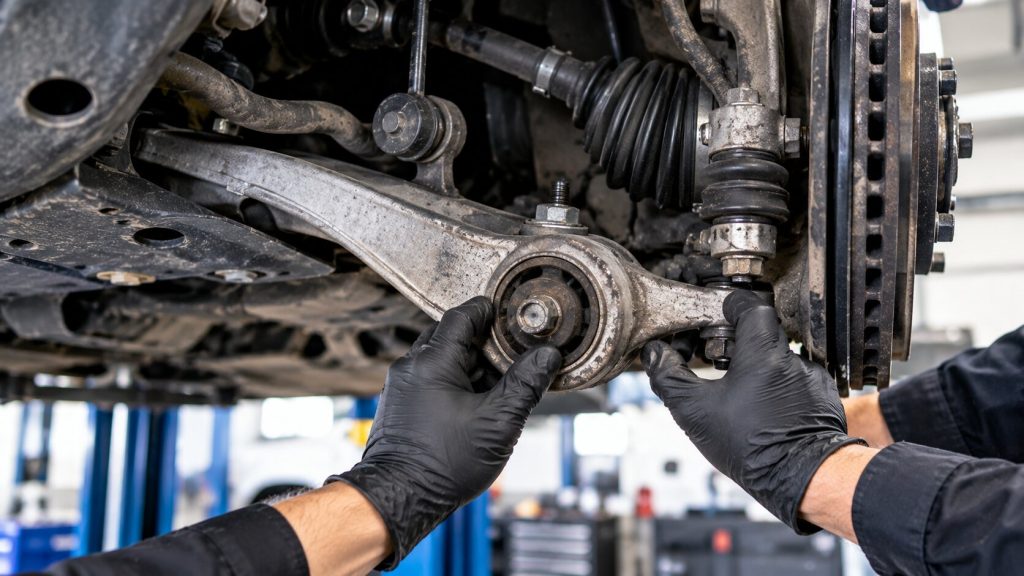
Heavy Land Rover frames put continuous mechanical pressure on your front suspension components during daily driving. When we inspect vehicles driving down Utah routes like 2300 East or navigating steep canyon approaches, we frequently find worn rubber bushings that allow the lower control arms to shift out of place. Catching these warning signs early keeps your vehicle riding smoothly and prevents compounding damage to your tires, steering linkages, and brakes.
Proper maintenance includes watching for fluid service needs or climate control issues, like scheduling an aircon repair before summer heat sets in. Protecting your vehicle with complete coverage and special offers keeps major systems running safely for years.
What Control Arms and Bushings Do in Your Suspension
Lower and upper control arms act as heavy-duty metal hinges connecting your vehicle’s frame directly to the front wheel assemblies. Rubber or fluid-filled bushings sit at each hinge point to cushion road bumps and keep metal parts from grinding together. Meanwhile, integrated ball joints function like human hip joints, allowing the front wheels to pivot smoothly left and right when you turn the steering wheel.
When these suspension joints are in good condition, your Land Rover stays planted firmly on the road. The rubber bushings absorb impacts from potholes and speed bumps while holding your wheel alignment exact. Over time, exposure to winter road salts, engine heat, and vehicle weight causes the rubber sleeves to crack, tear, or leak their internal dampening fluid.
Common Symptoms of Worn Control Arm Bushings
- Front-end clunking: You hear a dull metallic thump or knocking sound when driving over bumps or pressing the brake pedal.
- Steering wheel shimmy: Loose or torn bushings allow the front wheels to flutter, sending vibrations through the steering wheel at highway speeds.
- Brake wander: Your Land Rover pulls noticeably to one side under sudden braking as the loose control arm shifts backward.
- Uneven tire wear: You notice the inner edges of your front tire treads wearing down much faster than the rest of the tire.
- Vague steering feedback: The steering feels loose or delayed when changing lanes or driving through mountain curves.
When control arm bushings wear out completely, the internal metal sleeve knocks directly against the vehicle’s frame brackets. We test these bushings by applying leveraged force with a pry bar at the rear mount point; when a hydro-bushing ruptures, we often measure over 6 millimeters of excess lateral play, which causes dynamic alignment shifts every time you slow down or accelerate.
How Ball Joint Wear Compromises Handling Safety
Ball joints act as the main pivot points between your suspension control arms and the front steering knuckles. Inside each joint, a polished steel ball stud rotates inside a greased synthetic socket to give you smooth, effortless steering control. Through continuous flex and road exposure, protective rubber boots tear open, letting road grit in while washing out the lubricating grease.
Dry or pitted ball joints begin to bind, squeak, or develop loose play inside the socket. As tolerance gaps open up beyond factory specifications, the front wheels can wobble off their alignment line under normal driving loads. Left unaddressed, extreme ball joint wear can lead to full joint separation, dropping the lower control arm directly onto the wheel rim.
Identifying Irregular Tire Wear and Alignment Shifts
Suspension bushings hold your vehicle’s wheel alignment settings locked in place under heavy road forces. When bushing rubber tears or loses its stiffness, the lower arm shifts backward during braking and outward during hard turns. This uncontrolled movement changes your toe and camber angles in real time, dragging the tire rubber sideways across the asphalt.
- Inner shoulder wear: Sagging bushings cause dynamic negative camber, making the tops of the tires lean inward and rapidly chewing through internal tread edges.
- Feathered tread blocks: Worn ball joints let the toe alignment slip constantly, creating sharp, feather-like edges across the tread blocks.
- Cupped tread patches: Loose suspension joints allow the tire to bounce, leaving scalloped, scooped depressions along the tread surface.
Checking your tread depth across the inside, center, and outside edges reveals early suspension movement. Catching alignment movement early saves you from having to replace expensive performance tires prematurely. When we run a professional alignment check on our rack, we can confirm whether a 0.4-degree toe shift stems from tie rods or failing lower control arm bushings.
Why Proactive Suspension Diagnostics Prevent Secondary Damage
Ignoring front-end clunks allows harsh impact forces to hammer neighboring steering parts, including sway bar links, tie rods, and steering racks. The excess movement puts extra leverage on subframe mounts and speeds up wear across the entire front axle assembly. Replacing worn bushings promptly protects surrounding components from absorbing secondary impact damage.
During our comprehensive suspension evaluations, we load the control arms using specialized pry tools and chassis diagnostic gear to measure physical deflection against factory specs. Checking rubber isolators for surface cracking, fluid leaks, or center sleeve separation allows us to identify worn parts before complete joint failure occurs. Precision repair restores firm steering response, quiet operation, and factory ride quality.
Protecting Your Land Rover Suspension and Driving Safety
Catching early signs of control arm and bushing wear ensures your Land Rover remains stable, quiet, and safe on demanding Utah roads. By paying attention to front-end clunks, steering wander, or irregular tire wear, you can fix suspension degradation before it causes secondary damage to related steering parts. Regular inspections and timely repairs preserve your vehicle’s factory ride quality and protect your tires from premature wear.
At Steve’s Automotive Specialist, located at 2809 S 2300 E, Salt Lake City, UT 84109, our team brings decades of hands-on expertise to diagnosing and repairing Land Rover mechanical suspension systems. We thoroughly inspect control arms, ball joints, and frame mounts to catch wear early and keep your vehicle operating smoothly. Contact us to schedule your suspension evaluation and protect your tires and steering assembly.
Frequently Asked Questions
How long do Land Rover control arm bushings usually last?
Control arm bushings typically last between 50,000 and 80,000 miles depending on vehicle weight and road conditions. Frequent mountain driving, rough roads, and severe winter freeze-thaw cycles in Utah shorten rubber lifespan. Routine visual inspections help us catch rubber cracking before steering stability degrades.
Can I replace just the bushings instead of the whole control arm?
Yes, on select Land Rover models, worn bushings can be pressed out and replaced independently using specialized hydraulic press tools. However, if the integrated ball joint is also worn or pitted, replacing the complete control arm assembly is usually more cost-effective. Installing a complete assembly ensures all fresh joints and bushings operate under matching wear lifespans.
Is it safe to drive with a clunking control arm bushing?
No, driving with severely worn control arm bushings is unsafe because it alters wheel alignment under braking and causes rapid tire destruction. Continued movement forces metal components to hit mounting brackets, risking frame damage and erratic steering behavior during emergency stops.
Why does my vehicle pull to one side when I apply the brakes?
When a lower control arm bushing fails on one side, hitting the brakes forces that wheel to shift backward under load. This sudden shift alters your wheel alignment momentarily, pulling the steering wheel toward the side with loose bushings. Replacing the worn bushings and performing a four-wheel alignment resolves brake-induced drift.
