
Ford starter failure often manifests as a single click or a grinding noise during ignition. In Utah’s climate, extreme temperature swings accelerate internal wear on solenoids and brushes. Understanding the distinction between battery issues and starter mechanical failure is essential for maintaining vehicle reliability and preventing unexpected stranding in cold weather.
Why Starter Reliability Matters for Ford Owners
The starter motor is the bridge between a stationary engine and a running one. For Ford owners, particularly those driving F-Series trucks or Transit vans, a reliable starter is not just a convenience; it is a necessity for work and daily transit. When the starter begins to fail, the vehicle becomes unpredictable. Ignoring early warning signs usually leads to a complete “no-start” condition at the most inconvenient time possible, often during Utah’s freezing winter mornings or mid-summer heatwaves.
How the Ford Starting System Functions
To diagnose a problem, you must understand the basic sequence. When you turn the key or press the “Start” button, a small electrical signal is sent to the starter solenoid. This solenoid acts as a high-powered switch, engaging the starter drive gear with the engine’s flywheel and simultaneously drawing heavy current from the battery to spin the motor.
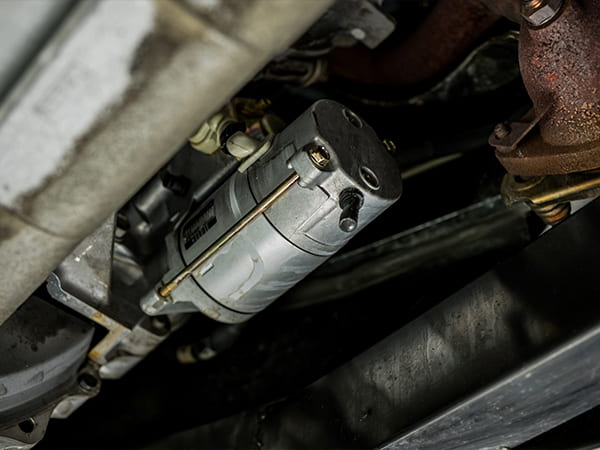
In many Ford models, the starter is positioned low on the engine block. While this is efficient for space, it exposes the unit to road debris, moisture, and significant thermal cycling.
Common Causes of Ford Starter Failure
We frequently see three primary internal failure points in our shops:
- The Solenoid: This is the most common culprit. The internal copper contacts can burn out or become pitted over time, preventing electricity from reaching the motor.
- Worn Brushes: Inside the motor, carbon brushes deliver electricity to the spinning armature. As these wear down, the motor loses torque or fails to spin entirely.
- The Bendix (Drive Gear): This is the mechanism that “kicks out” to grab the engine. If it sticks or the teeth wear down, you will hear the motor spinning, but the engine won’t turn over.
Signs of a Bad Starter: What to Listen For
Diagnosing a starter issue often requires using your senses before you ever pick up a wrench.
1. The Single “Click”
If you turn the key and hear a loud, singular clack, the solenoid is likely engaging, but the motor isn’t spinning. This often points to worn internal contacts or a seized motor.
2. The Grinding Noise
A harsh, metallic grinding sound—similar to “clashing” gears—usually indicates that the starter drive gear is not properly meshing with the flywheel. This can be caused by broken teeth on either component or a failing starter alignment.
3. The “Whirring” Sound (Freewheeling)
If the starter sounds like a high-pitched electric drill but the engine doesn’t move, the motor is spinning, but the Bendix gear has failed to engage the engine.
4. Intermittent Starting
Perhaps the most frustrating symptom is when the car starts fine four times out of five, but “dead” on the sixth. This is a classic sign of a flat spot on the starter’s internal armature.
How Local Weather Damages Starters
In Utah, our vehicles face unique challenges that specifically impact starter longevity.
- Thermal Expansion: Our 100°F summers followed by sub-zero winters cause the metal components inside the starter to expand and contract aggressively. This can lead to premature soldering failure or cracked housings.
- Road Salt and Corrosion: The salt used on Utah roads during winter is highly corrosive. Because starters are often mounted low, the electrical terminals can corrode, increasing resistance and forcing the starter to pull more amperage, which shorts out the internal components.
- Winter Oil Viscosity: Cold oil is thicker and harder to move. In a Clearfield winter, your starter has to work significantly harder to “break” the engine loose and get it spinning compared to a vehicle in a milder climate.
Is it a Bad Battery or a Bad Starter?
A common mistake is replacing a perfectly good starter when the battery is the actual culprit.
- Rapid Clicking: Usually indicates a low battery that doesn’t have enough “juice” to hold the solenoid closed.
- Dimming Lights: If your dashboard lights dim significantly when you try to start, the battery or a ground wire is likely the issue.
- Slow Cranking: While this can be a failing starter, it is more often a sign of high electrical resistance or a weak battery.
The Risks of Ignoring Starter Symptoms
Continuing to use a failing starter is a gamble. Beyond the risk of being stranded, a malfunctioning starter can damage the engine flywheel. If the starter gear grinds against the flywheel repeatedly, it can break the teeth off the flywheel itself. Replacing a starter is a standard procedure; replacing a flywheel often requires removing the entire transmission, turning a relatively simple repair into a major mechanical overhaul.
Ford Starter Testing and Professional Evaluation
When a Ford exhibits unusual noises or inconsistent starting behavior, a professional diagnostic can accurately determine if the fault lies within the starter, the battery, or the ignition circuit. To ensure your vehicle remains reliable throughout the changing Utah seasons, you can contact the team at Steve’s Automotive Specialist for a definitive assessment of your starting system.
Frequently Asked Questions
Can I start my car if the starter is failing?
Sometimes. If there is a “flat spot” on the motor, tapping the starter housing with a tool can sometimes jar it into working one last time. However, this is a temporary emergency measure and not a fix.
How long does a Ford starter typically last?
Most OEM Ford starters last between 100,000 and 150,000 miles. However, frequent short trips and extreme weather conditions in Utah can shorten this lifespan significantly.
Will a bad starter drain my battery?
A shorted starter can pull excessive current, which may drain or even damage a battery. Additionally, repeated unsuccessful attempts to start the car will quickly deplete the battery’s charge.
Can a blown fuse cause starter problems?
Yes, but a blown fuse is usually a symptom of a larger problem. If the starter motor is drawing too much amperage because it is seizing, it will pop the fuse to protect the electrical system.
Comprehensive Ford Starter Analysis
Ford starter problems are often predictable if you know what to listen for. From the specific “click” of a failing solenoid to the grinding of a worn drive gear, these symptoms are your vehicle’s way of asking for maintenance before a total failure occurs. Given the demands of Utah’s environment, staying proactive with your starting system is the best way to avoid the cost and stress of an emergency tow.