
Extreme heat in Salt Lake City forces Audi E-Tron cooling systems to work overtime during fast-charging, causing slow charging speeds and permanent battery cell damage. Checking coolant levels, scanning pump diagnostics, and charging during cooler hours protect your battery health and maintain your driving range.
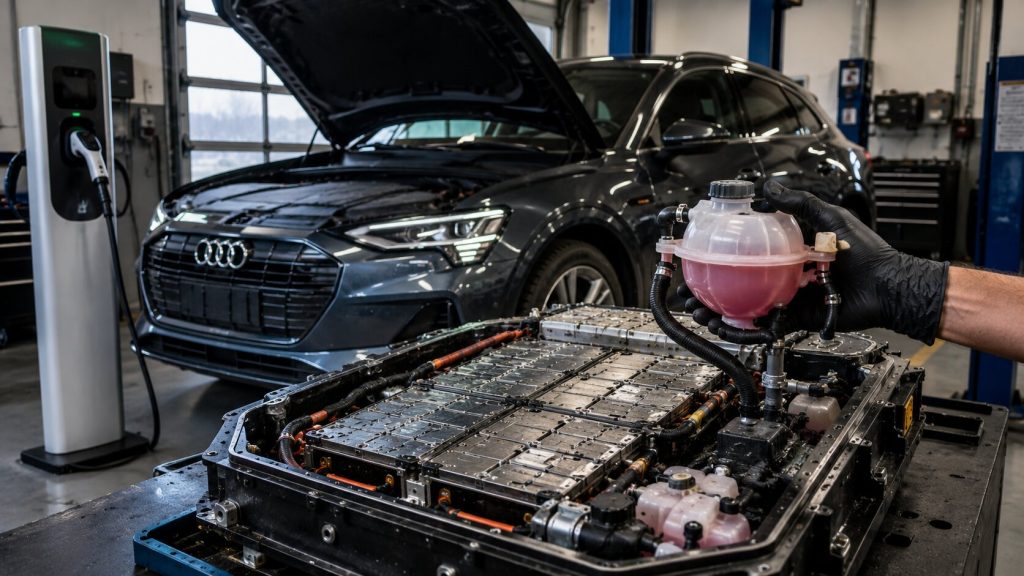
Drivers pulling up to the fast chargers off North Temple near Salt Lake City International Airport often watch their charging speeds plummet on hot days. After pulling a 6,000 lb E-Tron up the 6% grade on Parleys Canyon (I-80) in 100°F+ heat, battery temperatures easily pass 104°F (40°C) before you even plug in. If the cooling system can’t dump that heat, the car’s computer steps in—slashing fast-charging speeds from 150 kW down to a sluggish 32 kW to protect the cells.
Real World Impact of High Temperatures on EV Charging
When outside temperatures cross 100°F, heat radiating off hot pavement can push the battery pack past 115°F—forcing the car’s cooling pumps to run at maximum speed just to prevent the battery from overheating. Liquid coolant flows through the Audi E-Tron battery pack to maintain an ideal operating temperature between 77°F and 95°F.
Fast-charging on a hot afternoon generates intense internal heat] while radiant asphalt temperatures warm the battery pack from below. Because ambient air is hot, the radiators cannot shed heat efficiently. To prevent overheating, the battery management software limits incoming power, significantly slowing down a standard 30-minute charge while cooling fans blast at max speed.
How Heat Damages Battery Chemistry and Cooling Parts
Inside the battery pack, cells generate heat as current flows. Sustained internal temperatures above 113°F accelerate chemical changes inside the cells. This heat degrades microscopic internal layers, permanently reducing battery capacity and driving range.
The E-Tron relies on a low-conductivity G12evo glycol coolant to prevent electrical short circuits. Old coolant and trapped air pockets stop the V436/V437 pumps from moving fluid effectively, which starves the system during fast charging. This cavitation causes pump chatter that logs a hidden shadow fault code (P0C27 — Auxiliary Coolant Pump Low) long before a red warning light appears on your dash.
Diagnosing Cooling System Problems in My Shop
Spotting a failing electric water pump or trapping air bubbles during a routine coolant flush prevents localized hot spots that can permanently damage individual battery cells. A thorough inspection evaluates both mechanical components and digital diagnostic data.
My first step is scanning the battery control module with factory software to spot early flow restrictions or temperature spikes logged in the system memory.
Next, I evaluate electric coolant pump performance using live sensor data. A healthy system maintains a steady flow rate of at least 15 liters per minute during active battery cooling. Lower flow rates indicate worn pump motors, stuck valves, or plumbing restrictions.
Finally, my team inspects the air conditioning circuit and liquid chiller unit. The E-Tron relies on its air conditioning system to chill coolant when ambient air is too hot. Minor refrigerant leaks impair this chilling capability, leaving the battery unprotected during peak heat.
Diagnostic Verdict: We recently towed in a 2021 E-Tron stuck charging at a sluggish 32 kW off North Temple. Diagnostic data showed zero coolant flow—crystallized fluid had jammed the secondary water pump, causing the cooling unit to freeze solid and trigger severe fast-charge throttling.
Best Practices for EV Drivers During Summer Heat Waves
Simple habits protect your battery when temperatures rise in the Salt Lake valley:
- Schedule Fast Charging Wisely: Use high-powered fast chargers during early morning or late evening hours to reduce thermal load.
- Limit Charging to 80 Percent: Stop charging at 80 percent during road trips, as charging above 80 percent generates the most heat.
- Park in the Shade or Indoors: Parking in garages or shade reduces baseline pack temperatures before driving.
- Pre-Condition While Plugged In: Use the Audi app to cool the cabin and battery using grid power before unplugging.
Long-Term Benefits of Regular Cooling Maintenance
Liquid cooling systems are vital for protecting high-voltage battery packs. Over time, battery coolant loses its protective chemical properties, turns acidic, and gathers debris. Periodically testing pump operation, checking fluid levels, and flushing old coolant maintains efficient heat transfer, protects driving range, and extends battery lifespan.
Protecting Your Audi E-Tron Battery Investment
Ignoring a dashboard cooling warning forces the car into a protective ‘slow-charging’ mode, which bakes the battery cells over time and permanently reduces how many miles you can drive on a full charge. Waiting weeks for dealership availability while driving with an underperforming cooling system adds unnecessary stress to vehicle components.
My shop provides targeted cooling system inspections and factory-level diagnostic checks to keep your car protected. Stop by Steve’s Automotive Specialists at 2809 S 2300 E in Salt Lake City for a full ODIS battery health scan and coolant refractometer test before your next summer road trip.
Frequently Asked Questions
Does extreme summer heat permanently damage my Audi E-Tron battery?
Yes, sustained high heat combined with fast-charging causes permanent cell degradation if the cooling system cannot maintain safe temperatures. High internal heat accelerates chemical breakdown inside the battery, permanently reducing driving range over time.
Is it normal for my E-Tron charging speed to slow down during hot summer days?
Yes, the vehicle computer automatically slows down charging speeds to prevent the battery from overheating in high ambient temperatures. If charging speeds drop dramatically below expected levels, your cooling system requires inspection.
Can a failing coolant pump cause battery overheating without showing a dashboard warning right away?
Yes, a weak coolant pump can operate at reduced capacity without triggering an immediate warning light. The vehicle will quietly reduce charging performance and air conditioning output long before a critical error code appears.
Should I avoid DC fast-charging my E-Tron during peak afternoon heat waves?
Yes, charging during cooler morning or evening hours significantly reduces thermal strain on the battery pack and cooling components. Avoiding fast-charging during the hottest hours of the day preserves battery health and ensures faster charging speeds.