
Hot Sandy traffic and heavy stadium idling push Audi Q7 water pumps past their thermal limits. Intense heat degrades fragile plastic cooling components, causing sudden coolant leaks and severe engine overheating. Testing system pressure and replacing worn parts stops unexpected summer breakdowns.
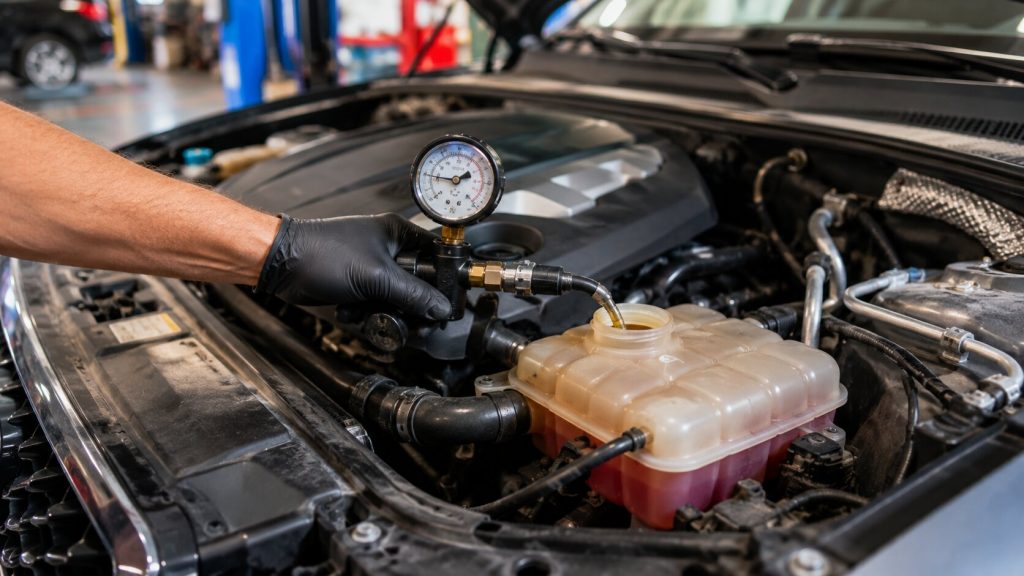
Tailgating and gridlock outside Rio Tinto Stadium in Sandy traffic during a 100 degree July afternoon pushes Audi Q7 water pumps past their thermal limits. Extended idling with zero airflow traps heat inside the front fascia, causing pressurized coolant to exploit brittle composite plastic cooling flanges and failing mechanical impellers.
Audi Q7 Thermal Stress and Stadium Gridlock Dynamics
These engines trap a lot of heat under the hood when the car isn’t moving. Hot traffic leaves a heavy SUV idling without the airflow required to lower engine temperatures. The electric cooling fans spin as fast as they can, but the slow moving coolant inside cannot carry away the intense heat soaking the engine block.
Factory cooling systems rely heavily on hard plastic pipes and thermostat housings to save weight under the hood. Constantly heating up and cooling down makes these plastic parts brittle, leading to tiny cracks along the seams. At the same time, the water pump bearings wear out faster from the extreme heat. Coolant escapes past worn seals through a tiny weep hole, causing the system pressure to drop instantly.
Common Symptoms of Audi Q7 Coolant Leaks
Catching early warning signs keeps your family from getting stranded during peak traffic hours. A sweet maple syrup smell is usually my first clue when a vehicle arrives at the shop, often paired with a low coolant warning message on the dashboard.
Drivers might also notice the temperature gauge bouncing around or the cooling fans staying on long after the engine shuts off. Skipping small warnings allows minor coolant drips to explode into massive leaks under heavy engine load.
Diagnostic Verdict: When a Q7 comes in smelling of sweet coolant after idling in 100°F Sandy traffic, I skip the visual check and immediately hook up a 20 PSI pressure tester. 9 times out of 10, you’ll find the secondary thermostat crossover pipe weeping directly onto the belly pan.
Advanced Diagnostic Testing Procedures For Audi Coolant Systems
Finding hidden cooling system problems takes more than just a quick look under the hood. In my shop, I attach a special pressure pump to the coolant tank and pressurize the system to 20 pounds per square inch. This forces fluid out of tiny cracks in hard to see plastic lines so I can spot them easily.
Next, I hook up a diagnostic computer to check live temperature data against what the dashboard gauge says. Scanning the radiator core with a thermal tool helps find blocked paths and failing pumps slowing down fluid movement.
Prevention and Replacement Protocols For Audi Q7 Water Pumps
Fixing cooling system trouble before a total failure happens protects your engine from warped aluminum and blown head gaskets. When I service these vehicles, I replace the brittle plastic pipes, the aging thermostat, and the water pump all at the same time to ensure everything works reliably for years.
Using factory approved coolant prevents internal mineral buildup and metal corrosion. Regular pressure checks during seasonal tune ups keep family vehicles dependable through harsh summer weather.
The Physics of Heat Soak and Impeller Cavitation in V6 Engines
When an engine idles for a long time in hot weather, coolant flow slows down while heat builds up heavily around the cylinder heads. Intense heat boils the fluid right next to hot metal parts, forming tiny vapor bubbles on the pump blades.
When those tiny bubbles collapse against the metal or plastic, they create mini shockwaves that chip away at the material and destroy the pump seals. This damage ruins the fluid flow inside the engine, driving temperatures even higher and speeding up the decay of nearby gaskets.
Why Routine Maintenance Matters For European Vehicles in Utah
Driving in Utah’s extreme weather—from freezing winters to scorching summer traffic—takes a heavy toll on your car’s cooling system. From freezing winter mountain commutes to blistering summer days idling in stadium traffic, your vehicle experiences severe thermal swings.
Addressing small warning signs early on prevents minor component fatigue from turning into catastrophic engine failures miles away from home. Regular fluid inspections and proactive part replacements ensure your cooling system handles high stress environments without unexpected breakdowns.
Secure Your Audi Cooling System Today
Ignoring a small leak can cause a plastic part to break completely, leaving you stranded in the summer heat. Dealership service centers often rely on rigid corporate scheduling and inflated parts markups, leaving your vehicle sitting in a backlog for weeks.
I deliver agile, specialized diagnostic workflows and precise mechanical repairs to get your vehicle back on the road safely. Protect your engine from thermal failure and schedule an inspection with Steve’;s Automotive Specialists today. Visit us at 9245 S 700 E, Sandy, UT 84070.
Frequently Asked Questions
Does an Audi Q7 need a coolant flush after replacing a broken water pump?
Yes, replacing the water pump requires draining most of the fluid, making it the best time to flush out old scales and debris. Fresh coolant prevents internal scaling and premature seal pitting in the new parts.
Will turning on the heater help cool down an overheating Audi Q7 in traffic?
Yes, turning the climate control to maximum heat opens the heater core circuit, letting the cabin dash vents act as a secondary radiator to pull heat away from the engine. This quick trick can drop cylinder head temperatures enough to prevent serious metal warping until you get moving.
Can I drive my Audi Q7 short distances with a slow coolant leak?
No, small leaks under high heat quickly cause the system to lose pressure, lowering the boiling point of the fluid and leading to dangerous engine overheating. Even a tiny drip from a plastic flange can turn into a massive rupture during heavy traffic idling.
Is it normal for Audi cooling fans to run loudly after parking on hot summer days?
Yes, the engine computer keeps the electric fans running after you turn off the car to manage trapped heat when outdoor temperatures climb past 90 degrees. If the fans keep running for more than 10 minutes or kill your battery, you likely have a failing sensor or a blocked fluid path.