
High-mileage rideshare Audi models navigating Salt Lake City International Airport face severe thermal breakdown and oil shear. Extended airport idling causes carbon buildup on piston rings and warps cooling components. Protect your investment by learning specialized diagnostics, maintaining aggressive oil change intervals, and scheduling expert local service before engine failure occurs.
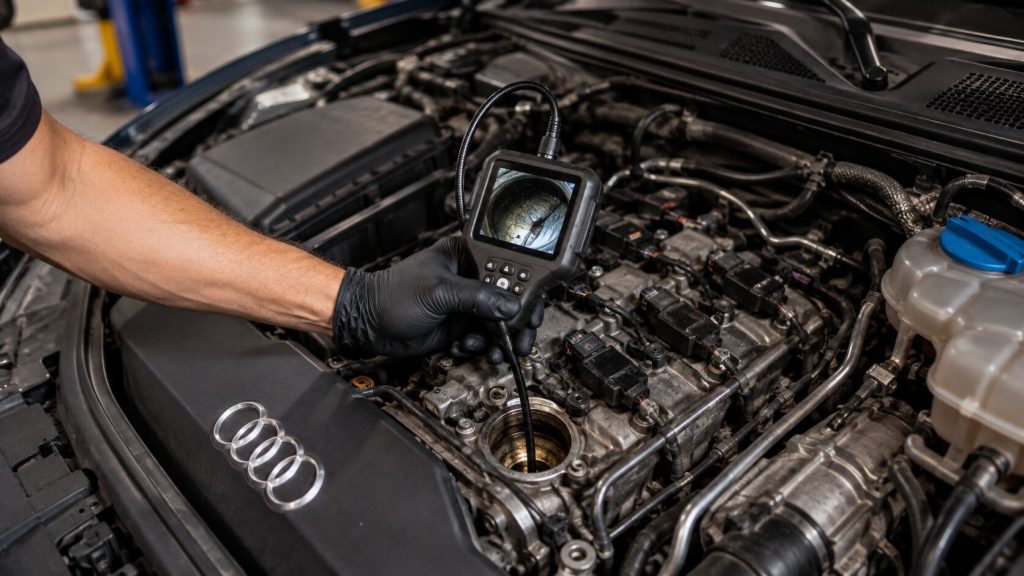
Sitting in the airport queue for hours on hot Salt Lake asphalt ruins Audi piston rings. High-mileage rideshare Audi models running the Interstate 80 corridor to the Salt Lake City International Airport suffer from rapid oil shear and localized thermal breakdown that basic quick lube shops miss entirely.
Mechanical Physics Behind Audi Engine Wear
Audis rely on tight factory tolerances and precise hydraulic pressures that deteriorate rapidly under severe urban duty cycles. Checking rideshare cars idling for hours in airport holding lots always reveals slow oil circulation alongside high exhaust temperatures. Intense trapped heat bakes synthetic oil right onto the thin piston rings, making them stick tight in their grooves. Once those scrapers rings carbon up, oil slips right past into the combustion chamber.
- The plastic thermostat housing and water pump assembly endure constant thermal cycling from heavy highway runs up to the terminal.
- Composite materials warp under this stress, creating micro-fractures that lead to slow coolant weeping.
- Ignoring these early signs guarantees eventual overheating before the dashboard warning even illuminates.
Stop-and-go driving introduces severe mechanical fatigue to European engine management systems. City traffic forces frequent gear shifts and low RPM operation that prevents optimal oil pressure. Without sufficient pressure, hydraulic valve lifters and timing chain tensioners fail to maintain proper tension.
Proactive Diagnostic Process For High Mileage Audi Fleets
Catching ring degradation and cooling system failure before total engine lockup requires a systematic inspection protocol using advanced diagnostic hardware. When cars roll into my bay, I follow a strict testing sequence to catch hidden issues early:
- Connect a cooling system pressure tester and hold fifteen pounds of pressure for twenty minutes to watch for pressure drop indicating housing hairline cracks.
- Pull the spark plugs and insert a digital endoscope down into the cylinders to visually inspect the piston crowns and cylinder walls for heavy carbon buildup and vertical scoring marks.
- Perform a cylinder leak-down test to measure exact percentage loss past the rings, flagging any cylinder exceeding 10% leakage for immediate chemical soaking or mechanical remediation.
I also inspect the PCV valve membrane regularly because failure allows crankcase pressure to push oil past turbocharger seals. Checking the condition of the serpentine belt and tensioner pulley assembly reveals signs of wobbling caused by heat damage. Scanning electronic control modules for intermittent sensor faults helps me pinpoint coolant temperature discrepancies and variable valve timing performance before they strand you on the highway.
Diagnostic Verdict: Endless idling loops at Salt Lake International bake oil right onto the EA888 piston rings, turning standard daily operations into rapid oil-shear failures.
Advanced Cooling System Integrity For Utah Climate
Salt Lake valley summer temperatures push cooling systems past their design limits, especially when combined with heavy loads and low airflow in traffic jams. The electronic thermostat regulates coolant flow through multiple pathways, but plastic housings degrade after years of thermal shock. Coolant leaks often start as minor weeping that evaporates instantly on hot metal surfaces, leaving white crusty residue known as witness marks.
- Radiator fins collect road debris, insects, and fine dust from desert winds blowing through the valley.
- Flushing the cooling system every thirty thousand miles removes silicate deposits that clog heater cores.
- Replacing aging plastic coolant flanges proactively prevents catastrophic hose blowouts on the freeway.
Hose integrity degrades from the inside out as electrochemical erosion breaks down the rubber compounds. Squeezing upper and lower radiator hoses reveals soft spots or crunchy internal buildup that signals impending failure. Water pump impellers can shear off their plastic shafts when coolant maintenance is neglected, leading to sudden localized boiling and warped cylinder heads.
Oil Shear Rates In Commercial Driving Duty Cycles
Commercial rideshare driving falls under severe service maintenance schedules according to factory guidelines. Standard ten thousand mile oil change intervals cause catastrophic engine failure in vehicles operating continuously in urban environments. Oil shear occurs when long chain polymer molecules in multi-grade synthetic oils are sheared apart by mechanical forces between moving metal surfaces.
- High-mileage Audi engines require specialized oil formulations with high sheer stability and strong detergent packages.
- Changing oil every five thousand miles removes fuel-diluted fluid and replenishes essential anti-wear additives.
- Checking oil levels weekly prevents running the crankcase dry during long shifts between airport runs.
Turbocharger bearings rely entirely on clean, high-pressure oil for lubrication and cooling. Shutting down a hot engine immediately after a hard run up the airport access road causes oil coking inside the turbocharger center housing. Letting the engine idle for sixty seconds before shutdown allows oil to circulate and carry away residual heat safely.
Securing Your Audi For The Long Haul
Ignoring excessive oil consumption or minor coolant loss turns a manageable preventative repair into a catastrophic engine failure right in the middle of a lucrative shift. Dealership service centers often impose massive scheduling backlogs and inflated corporate pricing that keeps your car off the road for weeks.
Get ahead of expensive failures by bringing your vehicle to Steve’s Automotive Specialists located at 2809 S 2300 E, Salt Lake City, UT 84109 for precision diagnostics and expert local care.
Frequently Asked Questions
Does airport idling really damage my Audi engine?
Yes, waiting in airport traffic traps high heat that bakes oil onto the rings since low oil circulation fails to cool the engine down.
Will standard synthetic oil prevent ring sticking during high-mileage rideshare driving?
Yes, using factory-approved high-grade synthetic oil combined with much shorter oil change intervals helps resist the thermal breakdown caused by heavy Utah stop-and-go traffic.
Is a coolant pressure test necessary during routine maintenance?
Yes, a pressure test exposes hidden hairline cracks in plastic thermostat housings before they rupture completely and cause sudden engine overheating on the highway.
Do I need specialized dealer software for Audi cooling diagnostics?
No, experienced mechanics rely on pressure testers and digital cameras to catch cooling leaks and engine failures quicker than standard dealerships.