
Southern Utah’s fine red rock dust bypasses standard Audi cabin filters, clogging evaporator cores and forcing blower motors to pull excessive electrical current. This friction destroys blower resistors and wiring harnesses. Prevent expensive HVAC failure by installing medical-grade antimicrobial HEPA filters and performing thorough system decontaminations after windy desert storms.
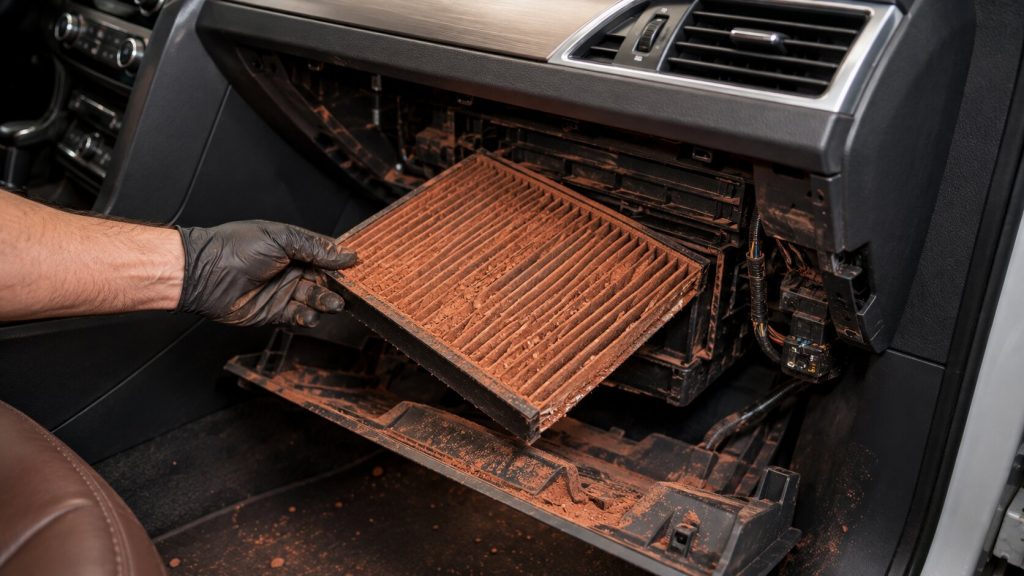
Santa Clara’s windy days push fine red desert dust right through the Audi cabin filters of 2018–2024 Audi Q5 and A6 models. Because this silt is microscopic, it slips right past standard paper filters and settles deep inside your car’s ventilation system. A high-pitched squeal behind your glove box or a musty smell after a windstorm are clear signs that red dust is damaging your Audi’s blower motor and A/C.
Why Southern Utah Desert Dust Destroys Audi A/C Systems
Southern Utah’s red dust is different from regular city smog—it is made of tiny, jagged bits of quartz and iron that act like liquid sandpaper.
Because these particles are microscopic, they slip right past standard paper air filters and get inside your car’s ventilation system. Here is what happens once they get in:
- Blower Motor Failure: The dust packs into the motor’s internal parts, acting like an abrasive that strips away essential lubrication. This causes the motor to overheat and eventually burn out.
- Cement Buildup: Inside your A/C system, this dust mixes with natural moisture from the evaporator core. This creates a thick, wet sludge that hardens like cement.
- Corrosion & Mold: This sludge traps moisture against your A/C’s aluminum cooling fins, causing them to corrode, while simultaneously creating a perfect breeding ground for mold and bacteria that eventually blow into your cabin.
Standard filters aren’t built for desert silt. If you live near the local riverbeds, this grinding compound is slowly destroying your HVAC system from the inside out.
Identifying Audi Blower Motor and Evaporator Stress
Many Audis arrive at my shop with a dirty filter complaint that has already evolved into a damaged electrical component. When the blower motor encounters resistance from dirt buildup, the amperage draws spikes.
This is often audible before the system fails completely; if your fan sounds strained or whiny at high speeds, it is fighting mechanical friction. Left unchecked, this heat-soaking effect transfers directly to the blower motor resistor pack. The resistor relies on airflow to shed heat; when restricted, internal components melt or short-circuit. Catching these symptoms early is the only way to avoid an expensive wiring harness repair.
How to Protect Your Audi Cabin Air System From Desert Dust
A simple filter swap is useless if the housing remains packed with clay. I follow a rigorous process to ensure the system is truly protected:
- Housing Decontamination: I remove the old filter and use a low-pressure air wand to clear upstream debris from the filter box, preventing immediate re-contamination.
- Evaporator Inspection: Using a borescope, I check the evaporator core for silt buildup and perform a chemical flush to dissolve blockages before they harden.
- Blower Motor Testing: If the harness draws tests higher than 12.5 amps, it’s a sure sign that red dust has worn out the motor bearings.
- HEPA Upgrade: I install an activated carbon HEPA filter with an antimicrobial layer to knock out odors and trap microscopic iron oxide dust.
Expert Cabin Filter Maintenance Tips for Southern Utah
If you park your vehicle near the Santa Clara river wash, your cabin air filter will have a significantly shorter lifespan than factory recommendations. I advise my clients to follow these protocols:
- Inspect Every 5,000 Miles: Bypass the standard 15,000-mile interval in favor of more frequent checks given our abrasive local environment.
- Disable Recirculation: Keep your climate control set to fresh air during windstorms. Using recirculation pulls trapped interior dust back through the blower housing and directly into your lungs.
- Prioritize HEPA Media: Always use high-efficiency particulate air filters to ensure incoming air is actively scrubbed before it reaches the evaporator core.
Expert Audi HVAC Repair in Santa Clara
Waiting for the check engine light is a losing strategy. Dealership service networks often quote multi-week backlogs and inflate costs by suggesting full assembly replacements for simple ventilation failures. Avoid the corporate red tape and bring your vehicle to an independent shop that understands how our specific environment affects European engineering. Steve’s Automotive Specialist is located at 2291 Santa Clara Dr, Santa Clara, UT 84765. Give me a call to schedule your next service and keep your Audi running exactly as the engineers intended.
Frequently Asked Questions
Does Santa Clara’s red dust really ruin standard Audi cabin filters?
Yes. Fine quartz and iron oxide particles pass through standard paper filters, clogging the evaporator core and destroying blower motor bearings over time.
Will a standard paper replacement filter solve the low airflow problem?
No. Standard filters just don’t have the tight fiber weave required to catch tiny desert dust, so they clog up again in no time on local roads.
Can a dirty HVAC filter cause electrical damage?
Yes. Restricted airflow increases blower motor resistance and amperage draw, which frequently melts the resistor pack and burns out the motor commutator.
Should I use an antimicrobial HEPA filter for desert driving?
Yes. Medical-grade HEPA filters stop fine dust penetration and prevent mold growth caused by moisture mixing with trapped red clay.