
If you’ve ever taken your car into a shop in Salt Lake City, Clearfield, Sandy, Orem, Hyde Park, or Santa Clara, you’ve probably heard someone mention “exhaust backpressure.” And honestly, it’s one of those terms that sounds more complicated than it needs to be.
Different people explain it in different ways, so it makes sense if you’re wondering what exhaust backpressure really means for your engine—and whether you need more of it, less of it, or none at all.
Let’s walk through it together, neighbor to neighbor, without the technical fog.
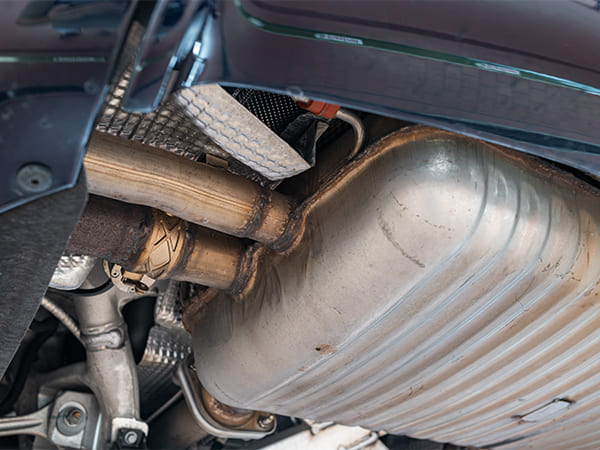
What Exhaust Backpressure Really Means
Here’s the simplest way to think about exhaust backpressure:
It’s basically how hard your engine has to work to push exhaust gases out through the exhaust system.
Picture trying to blow through a straw versus blowing through a big open tube:
- Straw = high backpressure (more effort)
- Open tube = low backpressure (easy)
Cars work the same way. When the exhaust system is blocked, restricted, or built incorrectly, the engine feels like it’s “exhaling through a straw.” That affects:
- Power
- Fuel economy
- Emissions
- And even how long your engine lasts
So when we talk about what exhaust backpressure really means, we’re really talking about how smoothly your engine can breathe out.
Why Backpressure Matters More in Utah
Utah has unique driving conditions that put extra stress on the exhaust system.
We’ve got:
- Steep climbs like Parleys Canyon and Sardine Canyon
- Hot summer days and freezing winter mornings
- Road salt and snow through much of the state
- Inversion season in the Salt Lake Valley
All of this influences your engine’s performance.
If you’re heading up a canyon in Sandy or Orem and towing a trailer, your engine is already working hard. Add a clogged catalytic converter or muffler, and suddenly you’re crawling up the hill with a frustrated engine that’s fighting extra backpressure.
And in places like Clearfield or Hyde Park, cold winter mornings create condensation inside the exhaust. Over time, that moisture mixes with soot and builds up restriction.
Even if you don’t see any obvious issues, Utah conditions can slowly raise backpressure without you knowing it.
How Exhaust Flow Works Step by Step
Here’s the play-by-play of what’s happening under the car:
- Combustion happens
The engine burns fuel and air, creating hot exhaust gas. - Gas enters the manifold
These pulses travel into the exhaust manifold. The shape of this piece helps guide the flow. - Through the catalytic converter
This is where harmful gases get cleaned up. Inside, there’s a fragile honeycomb. If it melts, cracks, or clogs, it creates a major exhaust bottleneck. - Through the mufflers
These reduce noise. But when they rust, collapse, or fill with debris, they also restrict flow. - Out the tailpipe
Ideally, gas flows out freely. If not, the engine has to push harder, and that’s when backpressure becomes a problem.
“Don’t Engines Need Some Backpressure?”
This is one of the biggest myths out there.
Your engine doesn’t “want” backpressure.
What it really wants is proper exhaust velocity and scavenging—a natural suction effect that helps pull fumes out of the cylinder.
When people say, “You need some backpressure,” they’re usually noticing a loss of low-end torque when the exhaust pipes are too big.
What’s actually happening is:
- The exhaust velocity drops
- Scavenging gets weaker
- The engine loses some efficiency
So the truth is:
You don’t want backpressure—you want smooth flow in the correctly sized system.
Common Causes of Excessive Backpressure in Utah
These are issues we see all the time across the Wasatch Front and Southern Utah:
- Clogged catalytic converters from misfires or age
- Rusty, collapsing mufflers from snowy roads and salt
- Crushed pipes from off-roading or driveway scraping
- Poorly sized aftermarket systems causing restriction
- Sensor problems leading to rich running and future clogs
A lot of these start small but gradually get worse.
How Too Much Backpressure Hurts Your Engine
When backpressure creeps up, cars start to feel tired. You might notice:
- Slower acceleration
- Worse gas mileage
- Rough idle
- Higher running temperatures
- A nasty rotten egg smell
- A check engine light
If you ignore the early warning signs, it can snowball into more expensive issues like:
- Overheated catalytic converters
- Damaged sensors
- Exhaust leaks
- Engine stress and overheating
Backpressure doesn’t just sit there quietly—it keeps adding strain.
Real-World Example of Exhaust Backpressure Problems in Utah
Here’s a story that might sound familiar:
A driver from Sandy brings in an aging SUV. They tow a trailer to Park City pretty often. Lately, they notice the SUV:
- Feels lazy on hills
- Uses more fuel
- Smells hotter than usual
We test the backpressure and find it’s way higher than normal. The catalytic converter is partially melted, and the exhaust has rust damage from years of winter driving.
After we replace the clogged components and fix the misfire that caused the damage, the difference is immediate:
- Better hill climbing
- Smoother acceleration
- Better fuel mileage
That’s the real impact of understanding what exhaust backpressure really means—a vehicle that can actually breathe again.
How Mechanics Actually Check Backpressure
Good shops don’t guess—they test. Here’s how:
- Backpressure gauges to measure restriction directly
- Scan tool diagnostics to watch fuel trims and O₂ sensors
- Thermal readings on catalytic converter surfaces
- Visual checks for rust, dents, or leaks
It’s all about finding the root cause before replacing parts.
Why This Matters for Your Wallet and Utah Air
Two simple reasons:
- Repair costs
A small restriction today can turn into a major catalytic converter meltdown later. Fixing problems early usually saves a ton of money. - Air quality
Utah’s inversion seasons mean emissions matter. A restricted or failing exhaust system pollutes more and can cause you to fail emissions tests.
Healthy exhaust flow helps your car—and your community.
Quick Self-Check: Are You a Good Candidate for an Exhaust Check?
Here’s a quick checklist:
- Your car feels underpowered
- You’re refueling more often than usual
- You smell something “off” from the exhaust
- You have check engine codes for sensors or the catalytic converter
- You drive winter roads regularly
If you said yes to at least two, it’s worth getting it checked.
Ready To Understand Exhaust Backpressure For Your Car?
Now that you know what exhaust backpressure really means, you’re better prepared to spot issues early and keep your engine healthy on Utah roads.
If you’re nearby, Steve’s Automotive Specialist offers exhaust evaluations, catalytic converter checks, engine diagnostics, and routine maintenance.
Feel free to book a quick inspection anytime, and explore our related posts for more simple, Utah-focused car care tips.
FAQs About Exhaust Backpressure in Utah
How do I know if my exhaust backpressure is too high?
Look for signs like sluggish power or bad fuel economy. A mechanic can measure actual backpressure with a simple test.
Is it safe to drive with a partially clogged catalytic converter?
It might run for a while, but it can overheat and damage other parts. It’s better to get it checked before it becomes a bigger repair.
Does installing a louder muffler reduce backpressure and increase power?
Sometimes yes, sometimes no. It depends on quality and installation. Cheap ones can actually hurt low-end torque.
Can cold weather in Utah make backpressure worse?
Indirectly, yes. Cold weather creates more condensation inside the exhaust, which leads to rust and restriction over time.
How often should I have my exhaust system inspected?
Every couple of oil changes is usually fine. More often if you tow, climb canyons, or drive snowy, salted roads.