
Electronic Parking Brake (EPB) systems replace traditional cables with computer-controlled actuators. When motor fatigue or calibration glitches occur, specialized diagnostic software must manually retract calipers and clear fault codes. Transitioning from mechanical to electronic engagement is vital for maintaining vehicle safety, rear brake longevity, and proper system synchronization.
Why Is Your Electronic Parking Brake Warning Light On
The shift from a hand-pulled lever to a console-mounted switch represents more than just a convenience upgrade. Modern EPB systems are directly tied into your vehicle’s stability control and ABS. When the EPB light illuminates on your dashboard, it often means the vehicle’s ability to perform emergency stops or hill-starts is compromised.
For drivers in high-elevation areas or regions with steep terrain, a functioning parking brake is a critical safety redundancy. Unlike manual systems where you could “feel” a cable stretching, EPB failures are often digital and sudden, requiring a professional technical approach to resolve.
How the EPB System Operates
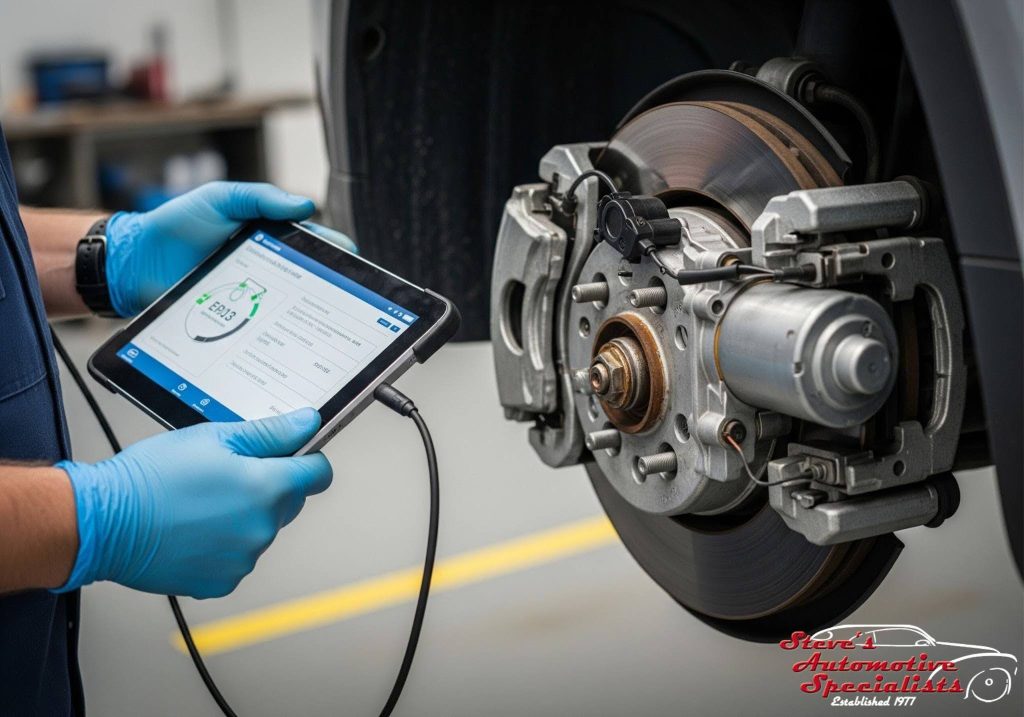
Most modern systems utilize a “Motor-on-Caliper” design. When you flip the switch, an electronic control unit (ECU) sends a signal to electric motors mounted directly on the rear brake calipers. These motors drive a ball screw mechanism that pushes the brake pads against the rotor.
Since software manages the whole process, the computer is always watching the motor’s power draw and position. If a motor struggles against internal rust and pulls too much current, the system throws a fault code and shuts down to keep your brakes from seizing up.
Common Failure Points: Actuators, Modules, and Sensors
In our experience, EPB issues generally fall into two categories: mechanical fatigue and electrical communication errors.
Actuator Motor Failure
The motors mounted on the calipers are exposed to the elements. Over time, road debris, moisture, and temperature fluctuations can crack the plastic housing or cause internal corrosion. A seizing motor will often produce a high-pitched grinding noise or fail to engage entirely.
Control Module and Wiring Faults
The EPB module acts as the brain. It communicates with the wheel speed sensors and the transmission. If a wire is frayed or a connector is corroded, the module loses track of the caliper’s position. This often results in a “Service Parking Brake” message even if the mechanical components are healthy.
Calibration Loss
After a battery replacement or a brake pad change, the system may forget the thickness of the pads. Without proper recalibration, the motors may over-extend or under-apply pressure.
Identifying Symptoms vs. Root Causes
While a warning light is the most obvious sign, there are subtle indicators of an impending EPB failure:
- Lagged Release: If the vehicle resists moving for a second, your electronic brakes aren’t retracting fast enough.
- Irregular Pad Wear: If a single rear pad is worn much thinner than the rest, you likely have a dragging actuator motor.
- The “Total Lock”: The worst-case scenario is a brake that won’t let go, effectively pinning your car in place. This is rarely a mechanical jam and usually a failsafe triggered by the control module.
Why Specialized Diagnostic Tools Are Mandatory
You cannot service an EPB system with a standard toolbox alone. Most modern vehicles require the system to be put into a specific Service Mode via a diagnostic scanner before the brake pads can even be touched.
Technicians use advanced tablets to perform Bi-Directional Testing. This allows the professional to manually trigger the left or right actuator independently to isolate which side is failing. Furthermore, scanners allow us to view Live Data, showing exactly how many Amps each motor is pulling. A motor pulling 20 Amps while its counterpart pulls 10 Amps is a definitive sign of internal resistance and imminent failure.
Real-World Insight: Environmental Impact in Utah
Our local winters are tough on EPB systems; road salt and slush often eat away at the electrical connectors. Salt and slush are particularly aggressive toward the electrical harness connectors located near the rear wheels.
We recently evaluated a vehicle where the owner reported a recurring EPB Malfunction light that would disappear in dry weather but return during snowstorms. Our diagnostics revealed that moisture was entering a weathered connector housing, causing a temporary short-circuit. Resealing that connection prevented a total module failure and kept repair costs way down.
How to Protect Your Braking System
To extend the life of an electronic system:
- Use it regularly: Keeping the actuators in motion prevents the internal screw mechanisms from seizing due to disuse.
- Professional Brake Service: Ensure that whoever changes your rear brakes uses the proper software to retract and recalibrate the calipers. Forcing the pistons back manually can destroy the internal electronic gears.
- Undercarriage Washes: Especially during Utah winters, rinsing the rear wheel area helps keep corrosive salts away from the sensitive actuator housings.
Expert Evaluation and Digital Diagnostics
If you are noticing unusual noises or dashboard warnings related to your braking system, having a specialist perform a digital health check can prevent a permanent lock-up. Operating since 1977, the team at Steve’s Automotive Specialist provides comprehensive diagnostic scans and mechanical inspections to ensure your vehicle’s safety systems are communicating correctly at 2809 S 2300 E, Salt Lake City, UT 84109.
Feel free to reach out for a full digital check and expert guidance to make sure your vehicle is ready for the upcoming season.
Frequently Asked Questions
Can I jump-start my car if the Electronic Parking Brake is engaged?
Yes, but if the battery is completely flat, the EPB may not disengage until a stable voltage is restored. Once the vehicle is running, the system should function normally, though it may require a quick calibration cycle.
What happens if the EPB fails while I am driving?
Modern EPB systems have safety redundancies. If you pull the switch while moving, the system typically initiates a controlled emergency stop using the ABS pump rather than a sudden lock-up. However, a system fault light should be addressed immediately to ensure these backups remain available.
Is there a manual release for Electronic Parking Brakes?
This varies by manufacturer. Some vehicles have a hidden cable in the trunk or under the center console, while others require a diagnostic tool or a physical removal of the actuator. Your owner’s manual will specify if a manual override exists for your specific model.
Why does my parking brake turn on automatically?
Many modern vehicles feature Auto-Hold or automatic engagement when the transmission is placed in Park. This is a programmed convenience and safety feature, not a malfunction, though it can usually be toggled in the vehicle’s settings menu.
Maintaining Reliability in a Digital Braking World
Electronic parking brakes make interiors cleaner and driving safer, but they’ve definitely made a once-simple repair much more technical. Recognizing the signs of a tired actuator and using the right diagnostic gear is the only way to keep your car from getting stranded by a stuck brake. Staying proactive with undercarriage cleanliness and seeking expert recalibration during brake services will keep your EPB system reliable for years to come.