
Stop-and-go traffic along the I-15 corridor causes intense heat that bakes brake pad material onto Audi brake rotors, creating a slick glass layer. This glazing causes loud squealing and loss of stopping power. professional thermal checks, dial gauge measurements, and upgraded semi-metallic pads fix this heat damage and restore normal braking.
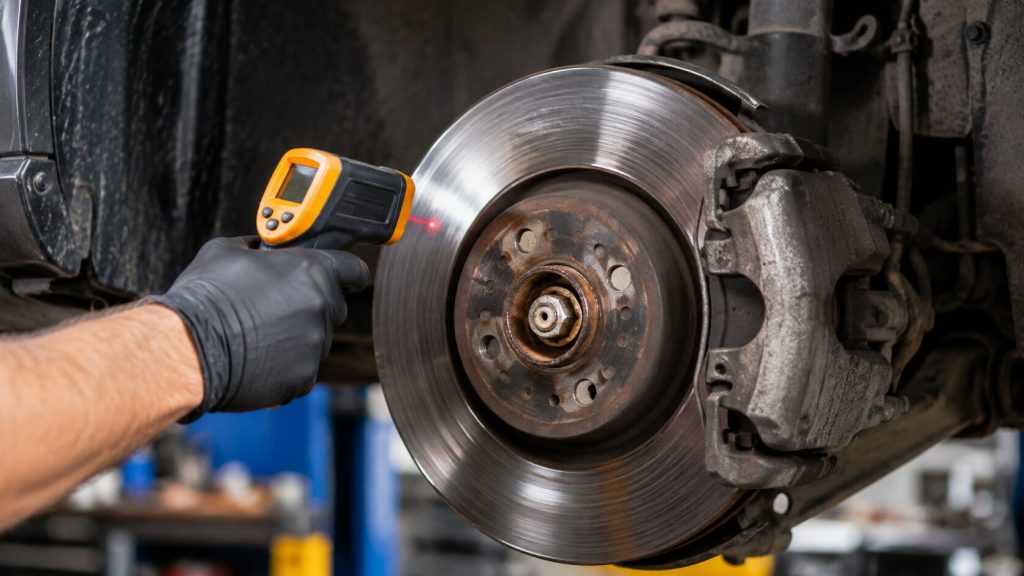
Stop-and-go congestion along the I-15 tech corridor from Lehi to Sandy generates friction heat that glass-smooths Audi brake rotors. Constant light pedal pressure during heavy traffic bakes pad friction material directly onto the rotor face, causing severe glazing, high-pitched squeal, and pedal fade.
How Silicon Slopes Traffic Causes Audi Brake Rotor Glazing
Daily commuting through Utah Valley creates severe thermal cycles on high-performance braking systems when transitioning from 70 mph highway speeds to crawling traffic between Lehi and Sandy. OEM Euro pads use high-metallic or aggressive semi-metric friction formulas engineered to bite hard right out of the box. Trapped against hot rotors during stop-and-go driving, thermal energy accumulates instantly without cooling airflow.
The primary symptom is a sharp brake squeal paired with a loss of biting force. Target components include the cast iron rotor face and semi-metallic pad surface. I diagnose this using non-contact infrared pyrometers for temperature distribution and dial indicator gauges for mechanical deflection. Commuters running stock organic or low-dust ceramic pads hit peak risk during rush hour heat-soaking on I-15.
The Mechanical Physics of Brake Rotor Glazing Explained
Audi brakes rely on an adhesive friction principle where standard pads deposit a microscopic transfer layer onto the cast iron rotor. When the brake pedal is pressed, the calipers squeeze the pads against this thin layer to stop the car, while moving air cools the metal disc.
Crawling through Silicon Slopes traffic traps thermal buildup. When temperatures exceed the pad compound limit, organic binding resins liquify and migrate outward. These melted resins coat the rotor face and vitrify under pressure into a hard, glassy film.
Adhesive friction drops to zero. The pad slides across the hardened surface, generating high-frequency vibrations and metallic squeals. Heat-soaking simultaneously breaks down hydraulic fluid, causing soft pedal travel and severe brake fade.
How I Diagnose Glazed Brake Rotors Step By Step
I catch rotor glazing before thermal stress warps the disc using this sequence:
- Visual inspection. Taking off the wheel lets me inspect the disc for a slick, reflective shine or scorched spots where the brake pad baked onto the metal.
- Infrared thermal measurement. After a test drive, I use a laser temperature tool to scan the metal disc and check for hot spots that prove the brakes are slipping.
- Dial indicator runout measurement. I mount a magnetic dial indicator to the steering knuckle and sweep the rotor surface. Lateral runout exceeding 0.002 inches indicates cast iron distortion requiring resurfacing or replacement.
Diagnostic Verdict: If your pedal goes soft and the rotor face reflects like a mirror under shop lights, the organic binders have liquefied—resurfacing or replacement is mandatory.
I never bed in new pads on glazed rotors because the existing glass layer ruins new friction material in under 500 miles.
Why Utah Elevation and Highway Speeds Worsen Brake Heat
The Silicon Slopes geography amplifies thermal stress. Drivers drop from 70 mph near Point of the Mountain into bumper-to-bumper stops near Sandy and Lehi, converting kinetic energy into intense thermal loads. When you hold the brakes down at a complete stop, the hot pads trap heat in one spot on the rotor and create warped hot spots.
Utah Valley elevation reduces cooling efficiency by lowering the mass flow of air through ventilated rotor vanes. Summer track temperatures on I-15 asphalt exceed 120°F, stripping the brakes of their heat-shedding capacity during traffic pauses.
Comparing The Best Audi Brake Pads For I-15 Commuting
Friction material selection dictates glaze resistance. Factory organic pads provide quiet stops and a soft pedal feel, but they cannot handle high heat, causing their internal glues to melt quickly in heavy traffic. Low-dust ceramic pads resist dust during normal driving, but prolonged dragging polishes their matrix into a glass-hard surface lacking cold bite.
Semi-metallic pads contain copper, steel, and iron fibers that pull heat away from the braking surface and push it into the backing plate and caliper. I always recommend upgrading to rugged semi-metallic or aggressive hybrid pads to survive the intense heat of the Silicon Slopes commute without breaking down their resins.
Schedule Professional Audi Brake Repair in Sandy Utah
Keep driving on a vitrified friction face, and you’ll cook the cast iron past its thermal threshold, warp the hats, and stick your caliper pistons.
Bring that howling Audi to Steve’s Automotive Specialist at 9245 S 700 E, Sandy, UT 84070— we’ll pull the wheels, check your runout, and get your pedal back.
Frequently Asked Questions
Can glazed brake rotors be fixed without replacing them?
Yes, minor glazing can be repaired by resurfacing the rotor on a lathe to strip away the hardened resin layer. Deep thermal penetration and hard spots require full rotor replacement.
Does brake rotor glazing cause permanent damage to brake pads?
Yes, extreme heat crystallizes the surface of brake pads, destroying their friction properties. These pads must be sanded down or replaced.
Is brake squeal always a sign of rotor glazing?
No, squeal can stem from worn wear indicators, loose hardware, or cheap compounds. High-pitched squealing paired with lost pedal bite strongly indicates glazing.
Will changing my driving habits on I-15 prevent rotor glazing?
Yes, avoiding continuous light pressure during traffic reduces thermal buildup. Applying brief, firm braking pulses allows airflow to cool rotors between stops.