
Documenting low copper concentrations in brake fluid and the installation of high-carbon rotors mitigates buyer concerns regarding ABS modulator failure and thermal rotor warping. Service logs provide forensic proof of hydraulic integrity during Wasatch Front descents, ensuring superior trade-in valuations in Utah markets.
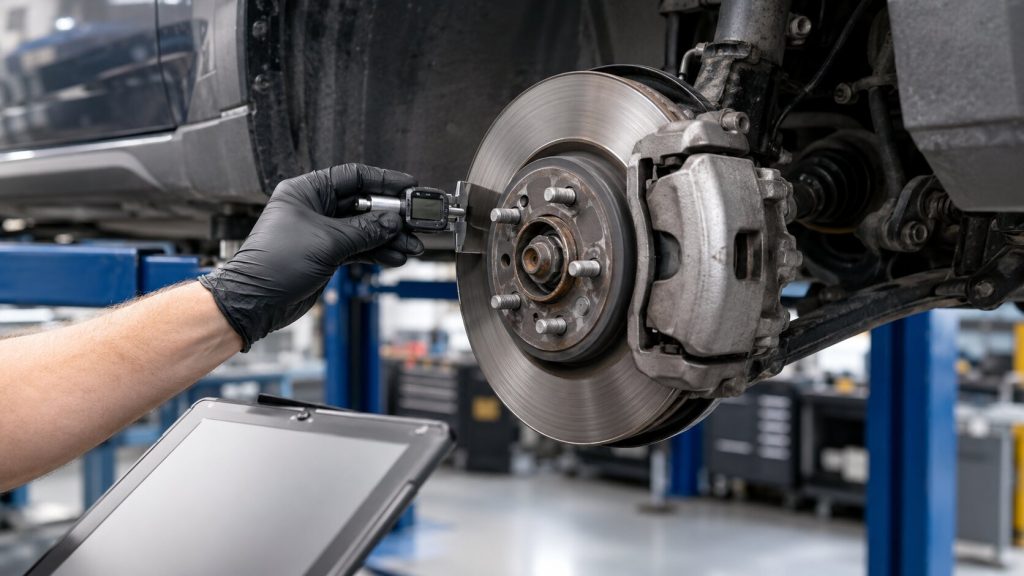
I am documenting the specific thermal fatigue on this high-carbon rotor to prove the vehicle can withstand the 400°F temperatures common during Wasatch Front canyon descents. Digital micrometers and copper-strip fluid tests validate that the hydraulic system exceeds factory specifications, safeguarding internal components from the effects of Utah road salt. By recording these precise measurements, I provide the forensic proof of reliability that secures maximum resale value in the competitive Orem and Sandy markets.
Why do Sandy buyers scrutinize the Wasatch descent history?
Measurements of high-carbon rotor thickness on vehicles commuting between Park City and Sandy verify the component’s ability to withstand extreme Utah thermal loads. The micrometer shows minimal variance, but the blue-tinted friction track confirms a history of localized overheating. In Utah, the transition from an 8,000ft canyon elevation to the 4,500ft valley floor is a mechanical stress test.
Managing thermal fatigue from 8,000ft canyon runs
I often see rotors that have reached temperatures exceeding 400°F during these descents. High-heat thermal cycling induces a metallurgical transformation, creating hard cementite spots with a marbleized texture that significantly degrades braking performance and resale value. This heat-spotting causes a permanent pedal pulsation that savvy Orem buyers identify immediately during a test drive.
By documenting the installation of high-carbon rotors, I provide proof that the vehicle possesses the superior thermal damping required to prevent the warped rotor stigma. This documentation prevents a potential 15% depreciation in trade-in value by demonstrating that the braking system was engineered for the geography, not just the street.
Salt Lake Valley Oxidation and Component Longevity
I am prying an alloy wheel off a hub that has been fused shut by magnesium chloride. This is the reality of driving the I-15 and the Belt Route during a Utah winter. The liquid de-icer UDOT utilizes is highly conductive, triggering galvanic corrosion between the aluminum wheel and the steel hub.
Countering magnesium chloride damage on I-15
A common “pad slap” service ignores the hub interface. I ensure every service record at this shop includes the mechanical cleaning of the hub face and the application of specialized anti-seize lubricant. Without this, a pre-purchase inspection (PPI) reveals seized components that signal neglect to a buyer. When I document the cleaning of these surfaces and the lubrication of caliper slide pins, I am proving that the vehicle has been shielded from the chemical rot prevalent in the Salt Lake Valley. This record transforms a standard maintenance item into a verified insurance policy against the structural seizing of the braking assembly.
The Financial Impact of Digital Service Records in Orem
I am dipping a copper test strip into a brake fluid reservoir. The strip turns a deep purple, indicating copper levels exceeding 200ppm. Brake fluid is hygroscopic; it pulls moisture from the air, especially during the rapid temperature shifts of a Utah May.
How Clean fluid logs prevent ABS modulator failure
Moisture accumulation in brake systems lowers fluid boiling points, creating a dangerous risk of high-altitude vapor lock for commuters in the Sandy and Orem areas. More importantly, moisture-laden fluid corrodes the internal valves of the ABS modulator. This record neutralizes the ‘$2,000 ABS reconditioning credit’ typically deducted by Sandy dealerships during trade-in appraisals.
My digital service logs prove the fluid was flushed before the copper threshold was crossed. This record confirms the internal hydraulic logic remains pristine, protecting the most expensive components of the braking system from invisible internal decay.
Verifying Hydraulic Integrity at Steve’s Automotive Specialist
I am currently using a digital pad depth gauge to verify even wear across the inboard and outboard pads. The owner’s manual suggests a simple visual inspection, but that is insufficient for the stop-and-go fatigue found at the I-15 Point of the Mountain interchange.
Reading the Diagnostic Verdict
The tactile reality of a neglected brake system is obvious: the “tackiness” of dried-out slide pin grease and the gritty resistance of a caliper piston struggling against internal silt. I just completed a runout test on a vehicle destined for the Orem resale market. The dial indicator shows a lateral runout of exactly 0.001-inch, well within the 0.002-inch “Smoking Gun” threshold for professional-grade performance. I also performed the Electronic Parking Brake (EPB) recalibration and the “Grinding-In” procedure required for modern Audi and BMW rear motor-on-caliper units.
Documenting these specific 8Nm solenoid bolt torques and 120Nm lug nut final specs provides a forensic trail of competence. A buyer seeing these specific data points understands the difference between a vehicle that was merely fixed and one that was technically preserved.
Call Steve’s Automotive Specialist in 9245 S 700 E, Sandy, UT 84070 to document your rotor runout and hydraulic integrity specs for your upcoming Wasatch Front appraisal.
Frequently Asked Questions
Does brake service history really increase my car’s trade-in value in Utah?
Yes. In competitive markets like Sandy and Orem, documented brake service proves the vehicle can handle extreme canyon descents and road salt exposure. Buyers and dealerships often deduct value for “shuddering” brakes, so a clean service log removes a major negotiation lever.
How often should I have my brake fluid tested in the Salt Lake Valley?
Brake fluid must undergo annual copper and moisture content testing to prevent internal hydraulic degradation. Utah’s variable humidity and high altitudes make fluid more susceptible to contamination, which can lead to expensive ABS modulator failure if not flushed every two years.
Can road salt from I-15 affect my vehicle’s braking performance?
Yes. Magnesium chloride used on Utah highways causes galvanic corrosion between wheels, hubs, and caliper pins. Regular service ensures component cleanliness and lubrication, preventing seized calipers that trigger uneven pad wear and diminished stopping power during heavy traffic.
Why is rotor quality specifically important for Utah drivers?
A direct fact is that Utah’s geography requires high-carbon rotors to manage the extreme heat of canyon driving. Thermal warping of standard rotors at 400°F produces mechanical vibrations, serving as a technical red flag of maintenance neglect for potential buyers in the Utah market.
What is the risk of skipping brake service before selling a car in Orem?
No seller should skip this because a pre-purchase inspection will likely uncover “glazed” pads or contaminated fluid. Signs of systemic neglect during mountain commutes signal to informed buyers that the vehicle was driven hard, directly impacting the quality of trade-in offers.