
Modern telematics track brake health by analyzing sensor impedance and fluid fluctuations. The system tracks your driving habits and brake wear simultaneously, flagging potential pad or fluid failures before they leave you stranded. This proactive monitoring allows for preventative repairs, ensuring your safety during challenging, high-altitude travel in remote areas.
Why Your Phone Knows You Need Brakes Before Your Dashboard Does
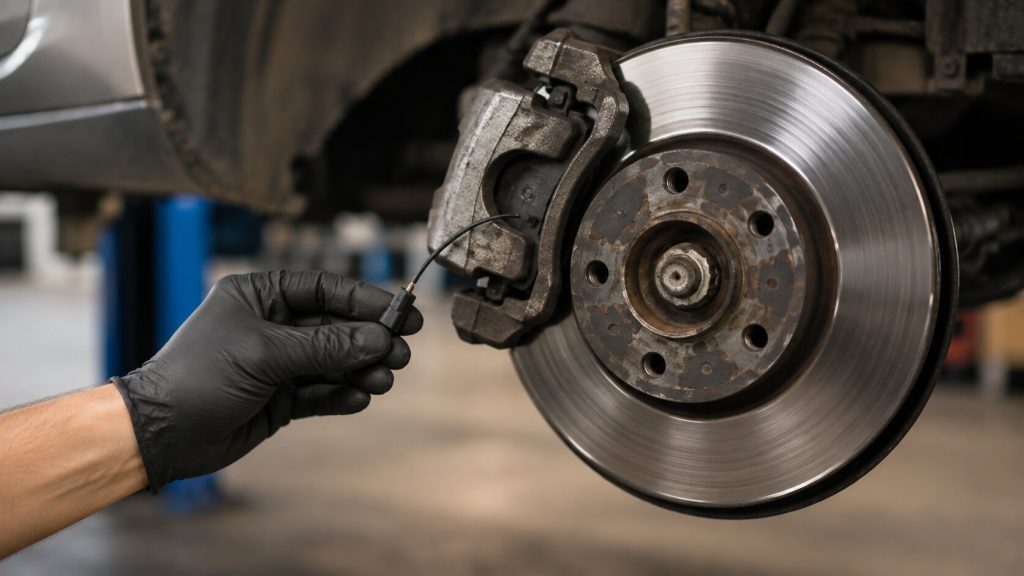
The days of relying solely on acoustic squealers, the small metal tabs that scrape the rotor to alert a driver to thin pads, are largely behind us. Many modern vehicles now utilize sophisticated electronic sensors that measure circuit resistance. As the brake pad friction material thins, the electrical resistance in the sensor circuit shifts. The vehicle’s gateway module registers this drift, sending a high-priority alert to the vehicle’s connected smartphone application long before the pads reach a dangerous level.
Factory service manuals often suggest generalized mileage intervals for brake maintenance, but these figures often fail to account for the unique demands of Utah driving. A daily commute that involves heavy, sustained braking on the descent from Big Cottonwood Canyon or Guardsman Pass creates a level of thermal fatigue and mechanical wear that standard intervals simply do not track. Rather than relying on generic mileage schedules, these sensors track the physical state of the pads to deliver real-time warnings that ensure your safety on the road.
Is it a Sensor Glitch Or Wasatch Salt Corrosion
One of the most frequent causes of inconsistent brake warnings involves the environment rather than the mechanics. The road salt used on Utah highways, often composed of magnesium chloride blends, is highly conductive. When this salty mist atomizes and settles into the wheel well, it frequently coats the sensor pigtail connectors. Over time, this salt creates a conductive bridge, adding electrical resistance to the circuit.
This is where precise diagnostic methodology is required. A less experienced shop may see an alert and immediately recommend a full brake job. A proper inspection involves checking for green, crusty oxidation on the harness pins. If the sensor resistance is fluctuating wildly during multimeter testing—jumping inconsistently between 500 and 800 Ohms—the issue is often a contaminated connector rather than a worn pad. This explains why electronics sometimes report a failure that the mechanical components have not actually earned.
Fluid Health in the Mountains Why Elevation Changes Everything
Ignoring the brake fluid flush is a common oversight, yet at elevations of 5,800 feet and higher, this is a significant safety gamble. Brake fluid is hygroscopic, meaning it absorbs moisture from the air. In the high-altitude, dry air of the Wasatch, the risk comes from internal condensation.
When the fluid reaches the extreme temperatures required for a long mountain descent, any water content turns into vapor. This creates the classic spongy pedal feel, or in severe cases, a total loss of braking pressure. The connected system tracks the time since the last service and the total cumulative braking load. When the diagnostic scan tool reviews the live data, the service life percentage of the fluid is clearly visible. Once the fluid health metrics fall below established safety limits, the system issues a warning to prevent vapor lock during demanding mountain descents.
Diagnose Connected Brake Data
Identifying the source of an alert requires combining visual inspections with live scan data. Often, an erratic waveform on the PicoScope confirms a compromised circuit rather than basic component wear. When a sensor is removed for inspection, findings often include microscopic hairline fractures in the sensor housing caused by road debris, which allow contaminants to bypass the seal and corrode the contacts.
Whether you require brake service or specialized European auto repair, Steve’s provides a reliable automotive service experience backed by a 36-month nationwide warranty.
By correlating the timestamp of an alert with the vehicle’s GPS logs, it is often possible to determine exactly when a signal tripped, such as during a high-stress mountain descent. This provides a definitive forensic conclusion. Providing this level of transparency is essential for ensuring that vehicle owners understand the distinction between a failure of a protective sensor and a failure of the braking system itself.
If your vehicle is showing warning signs or you are preparing for demanding local terrain, ensure your safety by scheduling an advanced system analysis with Steve’s Automotive Specialist at 2809 S 2300 E, Salt Lake City, UT 84109.
Frequently Asked Questions
Can smartphone alerts be relied on solely for brake health?
No. While some modern systems provide digital insights, they do not replace the comprehensive diagnostics performed by professional equipment. Relying exclusively on mobile alerts risks missing mechanical issues like caliper binding or structural hardware degradation that require a physical inspection to fully diagnose and resolve.
Does a brake alert trigger during mountain driving?
Yes. Mountain driving often involves sustained braking, which causes significant thermal buildup. Predictive monitoring catches mechanical risks early by flagging irregular thermal and pressure data before they become problems.
Does road salt really cause fake brake warnings?
Yes. Road salt is highly conductive and frequently causes electrical resistance issues in wheel speed and wear sensor connectors. This often leads to a diagnostic trouble code or a dashboard alert because the car detects a resistance reading that falls outside of the expected factory specification.
Is a brake fluid flush necessary for vehicles with connected alerts?
Yes. The connected system tracks the chemical and thermal degradation of the fluid. Even if your brakes feel fine on flat ground, the lower atmospheric pressure and the high heat of mountain descents make fresh, low-moisture fluid essential for preventing vapor lock in your hydraulic braking system.
Does a professional shop verify these cloud-based alerts?
Yes. These alerts are verified by using specialized scan tools to read live PIDs, checking the actual electrical resistance of the sensors with a multimeter, and performing a physical inspection to differentiate between true mechanical wear and external electrical interference like harness corrosion or sensor damage.