
Ever feel like your gas tank is disappearing faster than your patience in Salt Lake City traffic? A lot of Utah drivers are seeing unexpected drops in MPG, especially during winter or when driving up our steep canyon roads. It’s frustrating — and you’re not alone.
One sneaky culprit many people don’t consider is the impact of exhaust systems on fuel economy. In a state with high elevation and cold-weather corrosion, even a small exhaust issue can cause noticeable fuel loss. In fact, the EPA notes that exhaust-related sensor problems can cut fuel efficiency by up to 40%, which hits even harder here in Utah’s thin air.
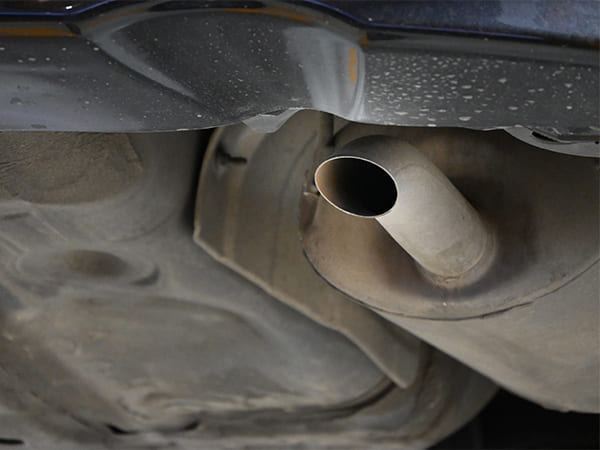
Why Your Exhaust System Matters for Fuel Economy
Think of your exhaust system as your engine’s exit pathway. Its job is to guide all those gases safely and smoothly away so your engine can focus on doing its job well.
When the manifold, catalytic converter, oxygen sensors, muffler, and pipes are all working together, your engine breathes well and burns fuel efficiently. But if even one part clogs or leaks, airflow gets interrupted — and that’s when the impact of exhaust systems on fuel economy starts to show. Your engine ends up working harder than it should, which means more fuel burned.
How Each Exhaust Part Affects Your Fuel Economy
Let’s break down what each major exhaust component does and how it affects your gas mileage.
Exhaust Manifold
This is the first place exhaust gases collect.
- If it cracks or leaks: extra oxygen sneaks in.
- What happens next: your engine thinks it needs more fuel than it actually does.
Oxygen Sensors
These sensors “read” your exhaust and tell the engine how much fuel to use.
- If they get slow or dirty: the readings are off.
- Then: your engine dumps in extra fuel, lowering MPG.
Catalytic Converter
This cleans up harmful gases before they exit.
- If it clogs: airflow slows way down.
- Which means: your engine strains, and your mileage drops.
Muffler & Resonator
These control noise and help smooth airflow.
- If rust or damage occurs: airflow becomes uneven.
- Result: less efficient fuel use.
Clear Signs Your Exhaust System Is Hurting Your Fuel Economy in Utah
Most Utah drivers notice symptoms before they know the cause. Here are some of the most common early warning signs:
- Your MPG drops right after cold or snowy weather
Salt, moisture, and freezing temperatures can make small corrosion spots turn into leaks.
- Your exhaust suddenly sounds deeper, louder, or rattly
That “new noise” is often the first hint that a muffler or pipe has rusted through.
- You catch a sulfur or fuel-like smell
This often points to a sulfur-heavy catalytic converter or faulty oxygen readings.
- Your car feels like it’s struggling on hills
Utah’s steep grades make catalytic converter issues show up quickly.
- The Check Engine light pops on — even briefly
Most people ignore this light, but sensors directly affect MPG and engine performance.
Quick Table: How Exhaust Issues Affect Utah Drivers
| Exhaust Issue | Common Utah Cause | What You’ll Notice | MPG Impact |
| Rusted muffler | Winter road salt | Loud noise, vibration | Moderate |
| Clogged converter | Short cold-weather trips | Slow acceleration | High |
| Leaking manifold | Temperature swings | Ticking sound | High |
| Faulty O2 sensor | Dust + age | Check engine light | High |
| Damaged hangers | Rough rural roads | Rattling | Low–Moderate |
Why This Matters: The Real-World Value for Utah Drivers
Once you understand the impact of exhaust systems on fuel economy, it becomes easier to catch problems early. A few things Utah drivers often gain:
- Fewer surprise repairs because issues are spotted sooner
- Better engine performance on steep canyon roads
- Cleaner air inside the cabin during long winter warm-ups
- Improved fuel efficiency all year long
And here’s a real eye-opener: according to EPA research, one faulty oxygen sensor can reduce fuel economy by up to 40%. Combine that with Utah’s elevation, and suddenly that “few MPG lost” becomes a lot more noticeable.
A Utah Example: A Santa Clara Driver Who Lost Nearly 25% MPG
A driver from Santa Clara came in wondering why their SUV felt sluggish on the drive toward St. George. The MPG had dipped almost overnight, and the only odd thing they noticed was a mild sulfur smell.
We inspected the vehicle and found the catalytic converter was nearly blocked and both oxygen sensors were lagging. Once everything was cleaned and replaced, their MPG jumped right back up. That’s the impact of exhaust systems on fuel economy in action — sometimes it’s a quick fix with a big payoff.
What Reputable Sources Say About Exhaust Health
If you look at groups like AAA, the EPA, and AMRA, they all highlight the same points:
- Modern vehicles rely heavily on accurate oxygen sensor data
- About 20% of cars on the road have exhaust-related issues
- States with heavy winter salting (like Utah) see more exhaust leaks and corrosion
So when these organizations say exhaust maintenance matters, it’s not just theory — it’s backed by data and real-world patterns.
Want Better MPG? Start With Your Exhaust System
Between our elevation, winter conditions, and mountain roads, Utah can be tough on exhaust systems. And when something goes wrong, the impact of exhaust systems on fuel economy becomes clear fast — from sudden MPG drops to sluggish performance.
If you live in Salt Lake City, Sandy, Orem, Clearfield, Hyde Park, or Santa Clara and something feels “off,” getting your exhaust inspected can help prevent bigger issues. Steve’s Automotive Specialist provides thorough, trustworthy service, and after every appointment, all common touch surfaces in your vehicle are completely sanitized for your peace of mind.
If you’re curious about your vehicle’s exhaust or fuel efficiency, feel free to reach out anytime for an inspection or explore more of our Utah maintenance tips.
FAQs
How often should Utah drivers check their exhaust system?
Once a year works for most drivers, but winter road conditions or daily commuting may require more frequent checks.
Can a small exhaust leak really affect fuel economy?
Absolutely — even tiny leaks throw off your sensors and can drop your MPG. They also can let fumes slip into the cabin.
Why does my fuel efficiency drop more in winter?
Cold air and winter corrosion both make engines burn more fuel. If your exhaust system isn’t flowing well, the drop becomes much more noticeable.
Does mountain driving wear out the catalytic converter faster?
Yes, long climbs create extra heat that stresses the converter. If it’s already getting clogged, steep grades push it over the edge faster.
Can I diagnose exhaust issues at home?
You can catch obvious signs — smells, noises, or MPG changes — but a full diagnosis usually needs professional tools to be accurate.